President Donald Trump has signed an executive order that may change the future of name, image and likeness in collegiate athletics. The order, titled “Saving College Sports,” notably discusses some current unknowns inside the NIL process. It also aims to introduce more policy and structure to existing NIL deals. Ever since a draft of the order was released a few weeks ago, it has sparked debate amongst many about the consequences for college sports.
This order has been drafted in sequence to the recent House v. NCAA settlement, which allows schools to share up to $20.5 million in revenue with athletes in exchange for their NIL rights. The decision has marked a significant change in college athletics, where student-athletes can benefit from more financial opportunities from the school. However, the executive order creates more uncertainty about what a student-athlete is and what they represent. For example, are they now an employee of the school? And, how is this fair from school to school?
Order details
The first key topic in the order relates to an increase in antitrust protection for colleges. This is important to prevent monopolies from being created in the realm of collegiate sports. The compensation limits in the House settlement may result in more lawsuits if Congress does not grant universities an antitrust exemption. There is currently an exemption being considered. However, the president does not have the right to grant antitrust exemptions. The order does ask, however, in a section titled “Legal Protections For College Athletics from Lawsuits,” that the Federal Trade Commission and Attorney General “review and, as necessary, revise” their policy and prepare litigation processes for future antitrust lawsuits.
Another key point in the order is the instruction to the National Labor Relations Board to officially decide student-employee status. If the NLRB were to keep college athletes as non-employees of the school and views them as amateur student-athletes, that would mean schools do not need to provide benefits, salaries and union rights, like the professional leagues do. It also would suggest universities would then be further protected against lawsuits involving athlete compensation and labor enforcement.
Debate
NIL has undoubtedly changed the game, as well as the consequences of House v NCAA. Athletes now have more control and say in their future, financially and in what team they can represent. However, NIL has many consequences and things that must be debated in the future. Players can now switch teams each year with no penalty, as well as being able to continuously look for the best deal, and sometimes not the best fit. Many argue that this has changed the culture of college sports, and maybe not for the better.
Last year, former legendary Alabama football coach Nick Saban testified for a hearing on NIL rules with the Senate. He stated that players now show “less resiliency to overcome adversity” as well as claiming NFL coaches told him today’s players are too entitled, caring too much about college NIL money. But others argue that the players deserve payment since it’s their choice and their body they put on the line.
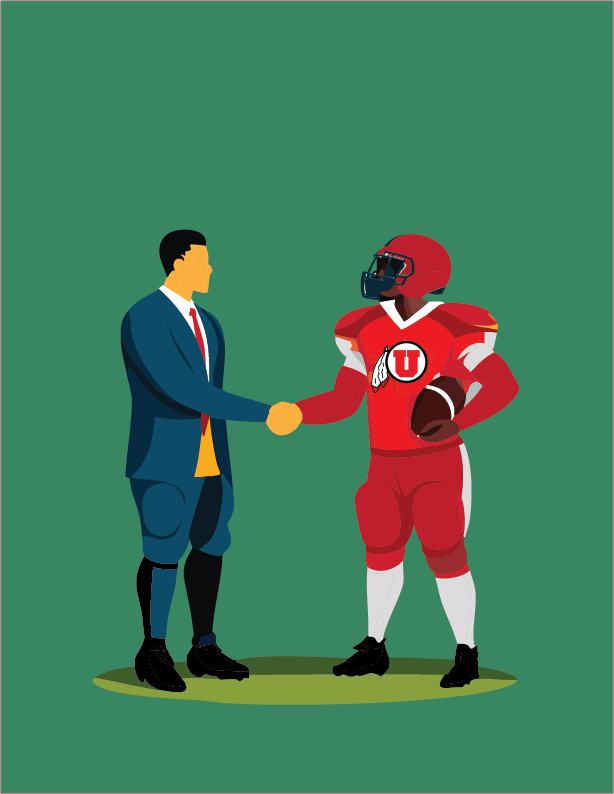
The NCAA is also having a debate on how to maintain and enforce recruitment and funding for the NIL boosters and agencies. A good example of an NIL booster is the Crimson Fund, in which Utah alumni and local companies can donate to help fund student-athletes. Currently, as there is no national standard for NIL boosters, many questions arise about who such boosters truly benefit. If we see a push for NIL rule uniformity, a potential result is an increased balance in teams that are not currently receiving these funds. This would allow players to go where their value is represented.
MSNBC writer Julie Hunyh gave her opinion on the matter, stating, “The world of college sports is already unrecognizable from what it was a few years ago, new conflicts are arising that haven’t existed before, and the NCAA’s inconsistencies against the shifting political landscape have left many athletes uncertain about their futures.”