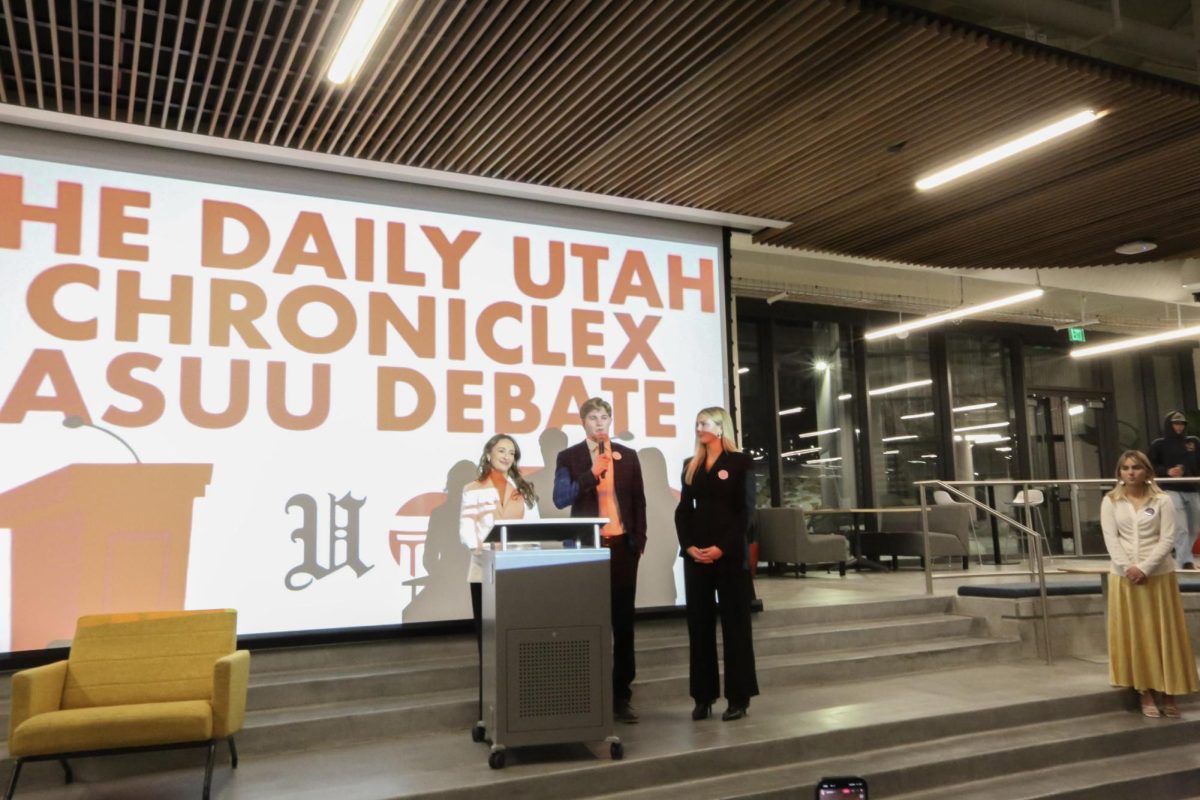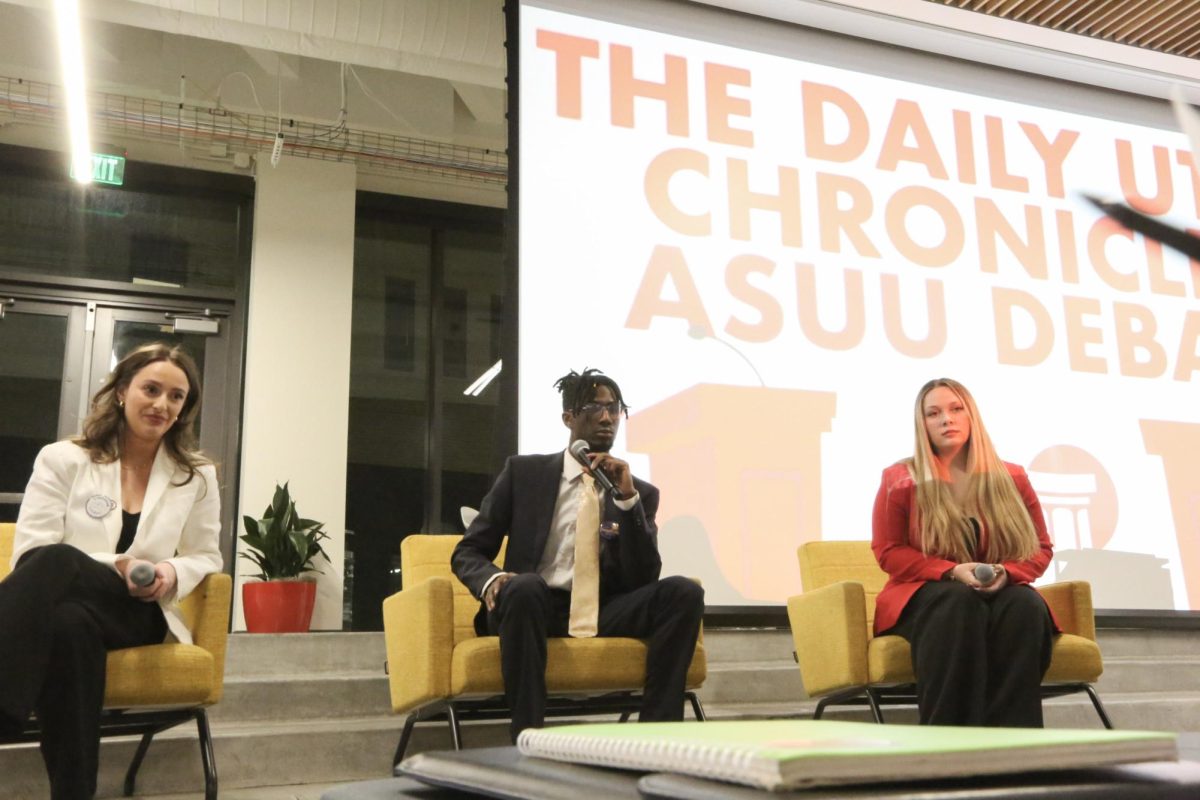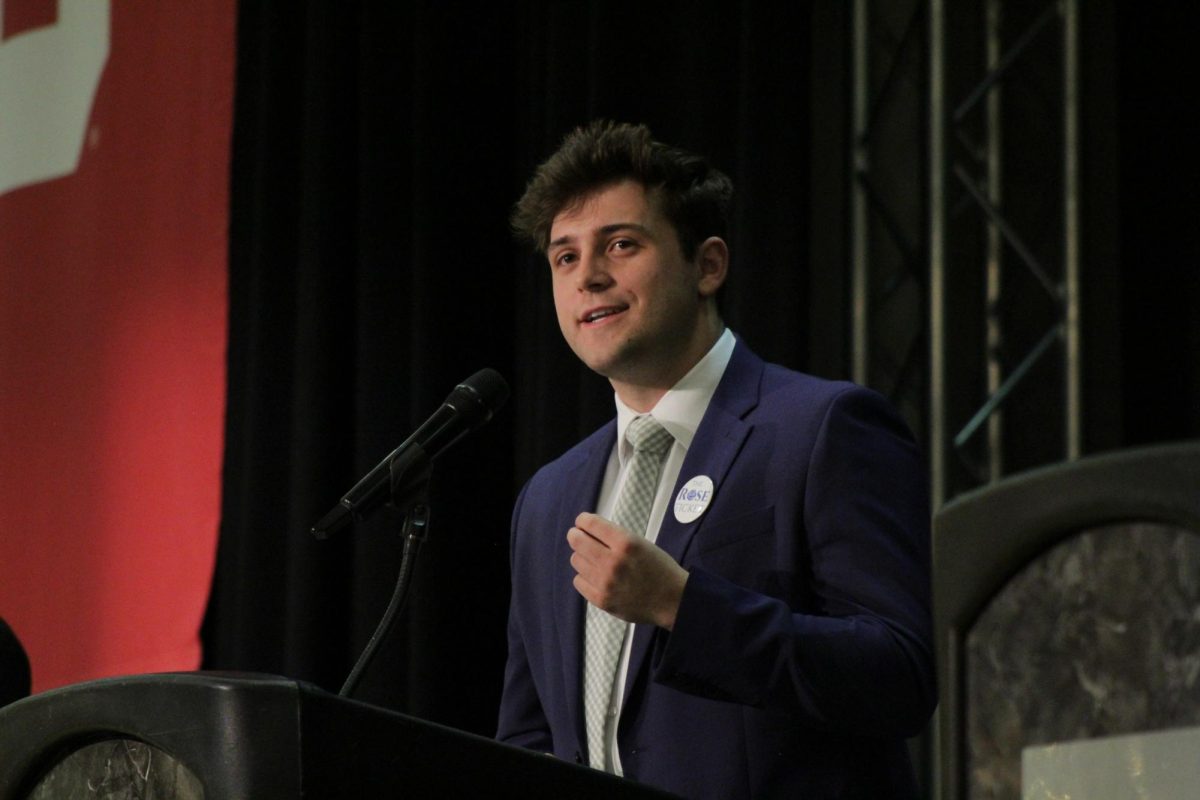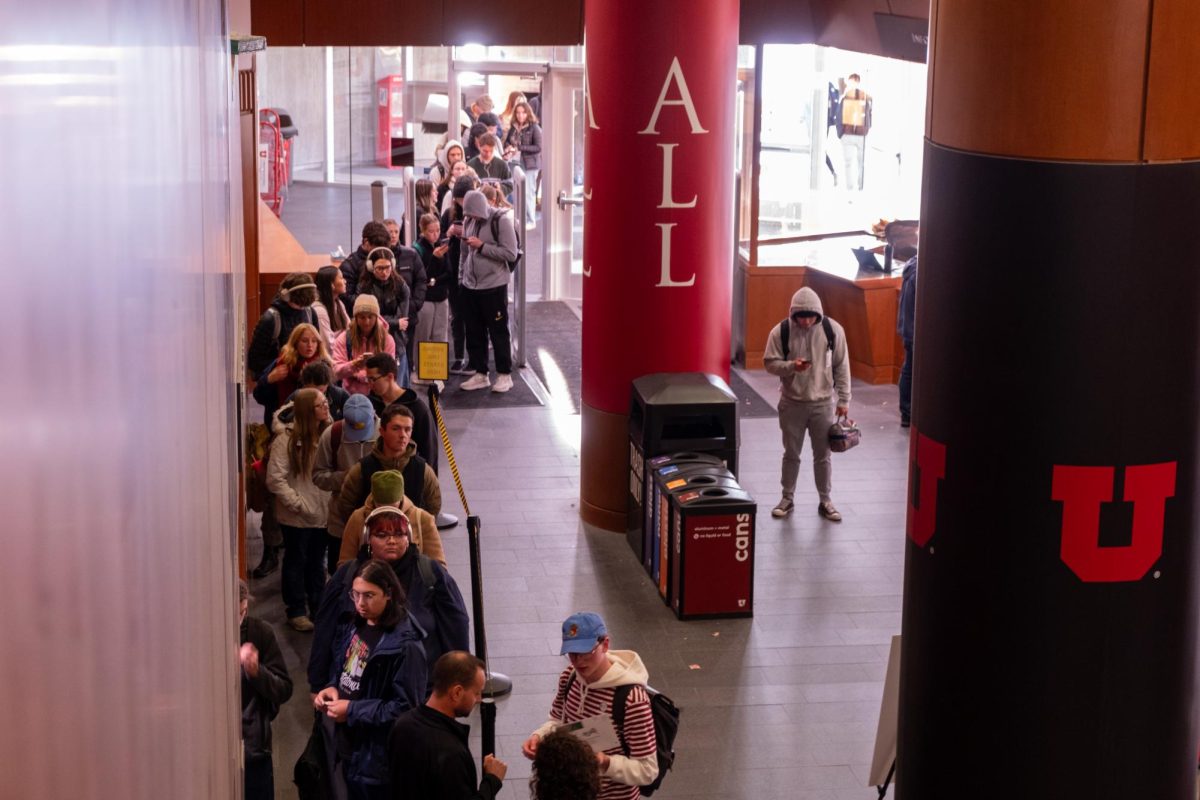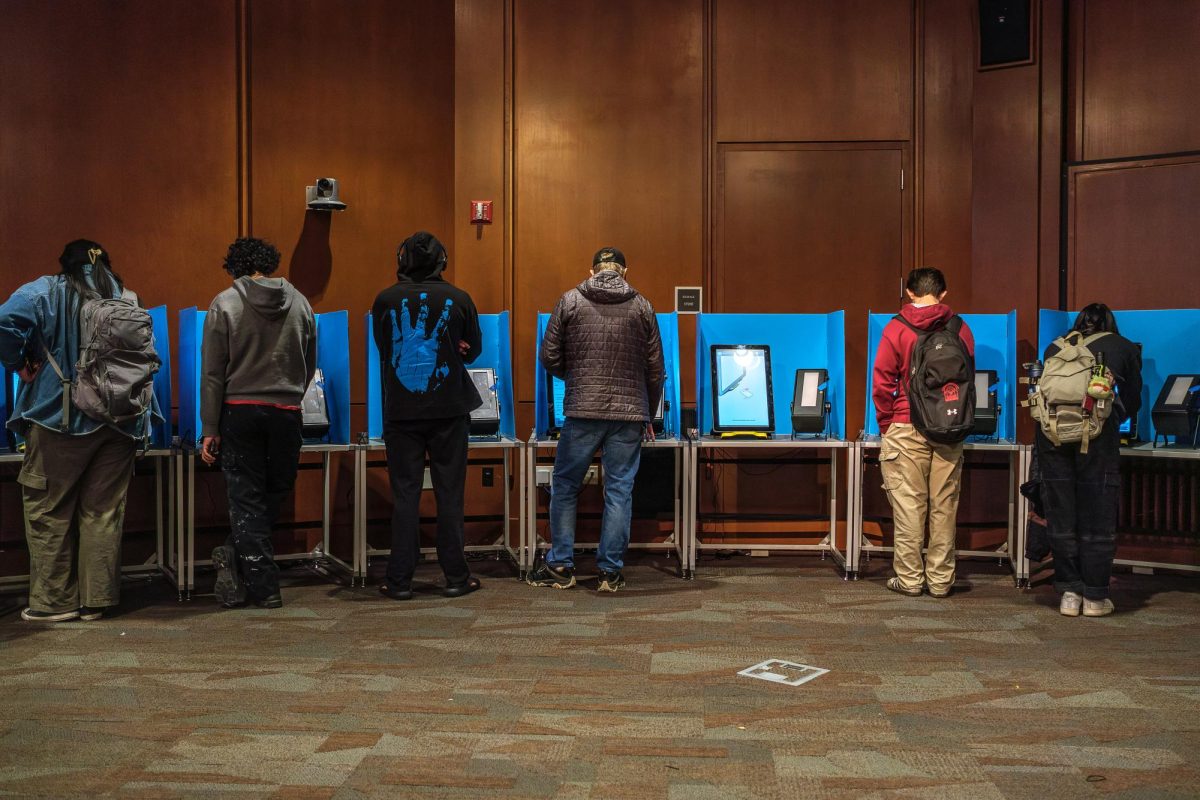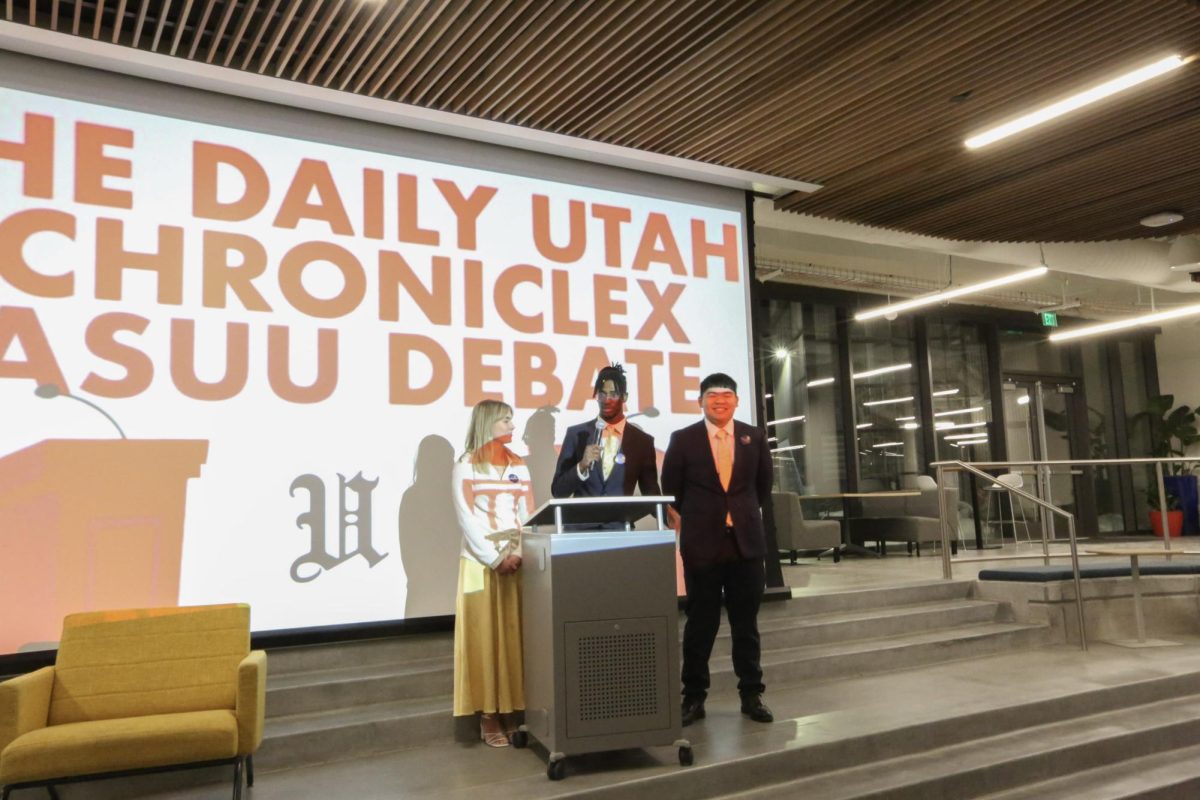
After the primary election for ASUU, three tickets remain in the race for the 2026-27 student body presidency. The Sunshine Ticket earned 962 of the 2,779 total votes. General voting closes Feb. 27.
The ticket is led by presidential candidate Rayshon “Ray” Baker, an Honors College student studying political science. Baker serves in the ASUU Assembly representing the College of Social and Behavioral Science. He sat on the Epicenter Student Advisory Board and works as a Resident Adviser.
Baker is joined by Edward “Eddie” Yokoyama, who is running for vice president of university relations, and Adrianna “Addie” Bonney, who is running for vice president of student relations.
Yokoyama is a marketing major from Honolulu, Hawaii. He is an intramural sports official, serves as a Business Scholar ambassador, practices with the women’s basketball team and is the Director of Brotherhood for the Delta Chi fraternity.
Bonney is a political science major from Boise, Idaho. She is a part of Dance Marathon, a member of the Utah wellness society and serves as the Director of Experience for the Alpha Phi sorority.
Motivations for running
“I’ve always been very passionate about campus change,” Baker said. “Freshman year, I tried to get involved in different boards and didn’t get in, but that didn’t deter me. I kept pursuing that change.” Through his time in the Assembly, Baker said he’s worked on legislation, resolutions and community outreach, but believes more can be done at the executive level.
Baker said the Sunshine Ticket started because he “decided to step up and bring together a group of people who are dedicated to the cause and come from different aspects of life.”
Yokoyama said his motivation to run stems from his experience as an out-of-state student adjusting to campus life. “I wanted to help facilitate and build that community on campus,” he said. “Running for executive leadership really pushed me out of my comfort zone,” Yokoyama said. “It allowed me to connect with people and help foster the community the U already has.”
Bonney said her decision to run reflects her desire to create community at a large institution. “When you’re at such a big school, it’s easy to feel like you don’t know anyone,” she said. “Instead of sitting in that mindset, I wanted to push myself out of my comfort zone and make sure other people’s voices are being heard.”
The ticket is filled with “extremely driven people,” Bonney said. “But we’re also people who genuinely care.”
Pillars
The Sunshine Ticket platform centers on several pillars: transparency, a voice for the student populace, engagement and an enhancement of the student experience
Baker said transparency is critical because many students do not understand what ASUU does or how decisions affect them. “The University of Utah is one of the only universities where the student body writes legislation,” he said. “But a lot of people don’t know that.”
The ticket plans to provide biweekly or monthly progress updates and promote ASUU’s legislation tracker to share key bills and resolutions.
Engagement with Registered Student Organizations (RSOs) would be one of the Sunshine ticket’s main priorities, particularly with funding. “It’s heartbreaking when you’re reading applications from cultural associations or clubs, and you can’t fund them to the capacity they need,” Baker said.
Yokoyama added that RSOs are one of the most effective ways to reach the broader student population. “We can’t be everywhere all at once,” he said. “But these organizations are embedded in communities across campus.”
Transportation, parking and accessibility
Transportation and parking concerns were also a focus of the ticket’s platform. “Parking is a huge issue for commuters,” Yokoyama said. “If we’re moving toward more housing and less parking, we need to support students through that shift.”
The ticket noted the upcoming “College Town Magic” development and their plan to prepare infrastructure for future students who’ll be most affected by these changes. The ticket supports increasing shuttle frequency and extending SafeRide hours. “We want to get the ball rolling now so students don’t have to deal with these problems later,” Yokoyama said.
Accessibility for disabled and injured students is another priority. Bonney pointed to malfunctioning automatic doors and limited handicap parking as ongoing issues. “Students should be able to get to class in a timely manner without having to leave 30 minutes early to walk half a mile,” Bonney said.
Safety and resource awareness
On safety and mental health, the Sunshine Ticket said the university already has strong resources. “We have the Counseling Center and the Wellness Center,” Bonney said. “There are so many resources that students don’t even know about.” The ticket emphasized the importance of promoting health services.
Bonney said the ticket wants to harness resources that already exist on campus, particularly through preexisting RSOs and offices. “It’s not always about creating something new,” she said. “It’s about making what we already have more accessible.”
The ticket described intentions to connect with preexisting sustainability efforts, food gardens and pantries, the Counseling Center, the Wellness Center and the Center of Cultural Engagement rather than inventing new programs.
Baker said improving campus lighting and expanding SafeRide hours are part of their broader safety approach. “It’s about making sure students feel protected,” he said. “When you’re in community spaces, and you know what resources are available, that creates a greater sense of safety.”
The ticket also sees ASUU Assembly and Senate representatives as an untapped power that should be better connected to students.
Advocacy
The ticket acknowledged the limitations of the student government while highlighting its pillar of advocacy. “We’re very limited in power,” Baker said. “We’re not going to sell you something flashy that we can’t do.”
However, he said the executive team can serve as a bridge between students and administrators. “We bring student representation to the table, and the administration brings university interests,” Baker said. “Our job is to push for student needs in those conversations.”
Yokoyama said the ticket would rely on surveys, town halls and data collection to support its advocacy. “If we have no evidence to back up what we’re saying, it’s easier to ignore,” he said. “We want to bring real information from the student body.”
“Tangible change”
The candidates said what distinguishes the Sunshine Ticket from its competitors is its focus on feasibility and immediate implementation. “A lot of tickets have great headlines,” Bonney said. “But how are you actually going to do that within a year?”
Baker said the ticket’s experience would allow them to “hit the ground running.” The ticket said they come from a diversity of backgrounds and networks. “When students vote for the Sunshine Ticket, they’re voting for tangible change,” he said. “We’re not running for the title. We’re running because we genuinely care about the students here.”