As a teenager, the issue of Medicaid was only a topic of political discussion for me. I supported the program’s expansion, but never really thought of the issue as my fight. My family had a strong health insurance plan through my father’s employer.
Then, shortly before I graduated from high school, my father was suddenly laid off. We lost health insurance along with his job. During this period, my family qualified for Medicaid and enrolled, thinking the coverage would help pay for things like routine checkups.
Suddenly, my father began experiencing severe back pain and had to have surgery for a slipped disc. Afterward, he developed a life-threatening MRSA infection near his spinal cord. These infections are often spread in hospitals and are highly resistant to antibiotics.
He had to spend several weeks in inpatient care and had multiple additional surgeries. MRSA infections can be chronic and recurring — a few months later, he was admitted to the hospital again. He spent another week inpatient, had another surgery and had a second PICC line placed.
The average cost of a night in the hospital in the United States is $3,025. The average cost of a PICC line $4,855.
Without Medicaid, the sheer cost of multiple weeks in the hospital and multiple surgeries would have financially crippled us, as it does for many families in this country. The coverage we received single-handedly allowed my family to get back on our feet after my dad recovered.
Today, my father is healthy and working a stable job. I am in college as planned, with my brother set to start in a year.
Societies need social safety nets so that when things go wrong, people can rebuild their lives. The United States is the wealthiest country with the most billionaires on earth. There is no excuse for this country failing to provide healthcare to its citizens.
Medicaid is one of the most important social safety nets this country has. Life could go wrong for any of us at any time.
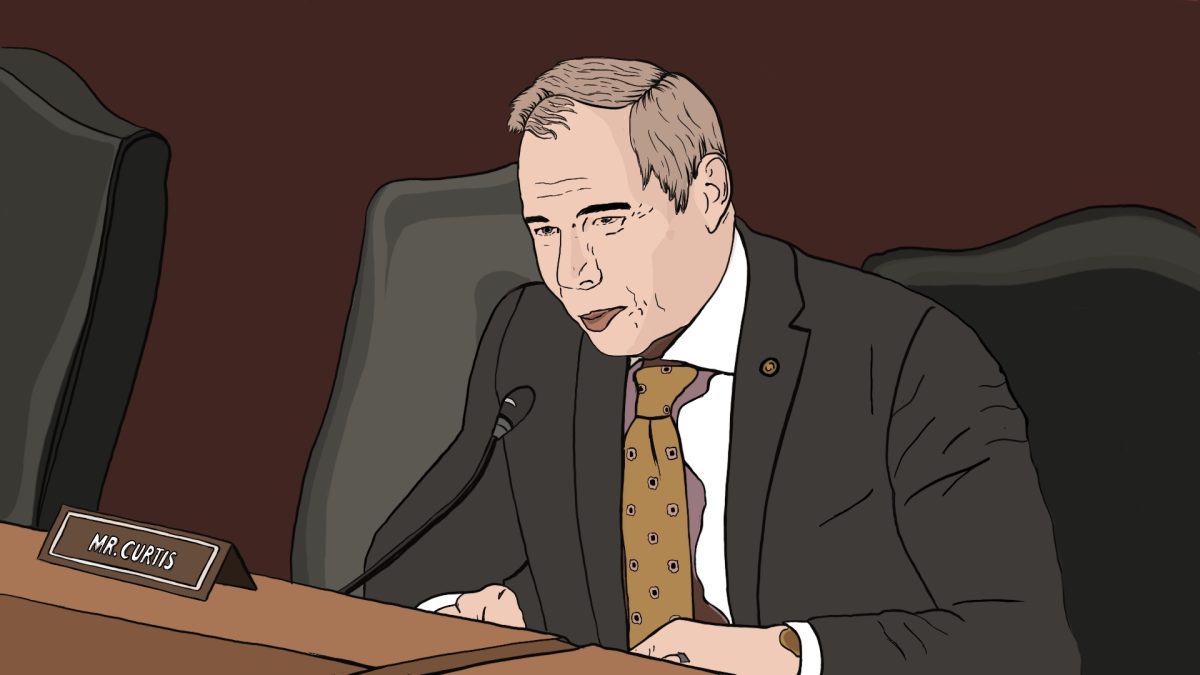
The Trump administration’s attacks on Medicaid are an attack on all of us. We must vehemently condemn the representatives who voted for the deadly Big Beautiful Bill: Representatives Moore, Maloy, Kennedy and Owens, as well as Senator Mike Lee and Senator John Curtis. Come the 2026 midterms, Utah must vote them out.
Proposed cuts
The Trump administration’s ‘One Big Beautiful Bill Act’ entails the biggest Medicaid cuts in history, slashing about $1 trillion from the program. An estimated 17 million Americans will lose health insurance under the legislation.
These Medicaid cuts will help finance a $70 billion increase in funding for Trump’s attacks on immigrants, and a boost to defense spending.
According to analysis by the Yale Budget Lab, the bill will decrease incomes for the bottom 20% of American earners, while increasing incomes for the top 1% by $30,000 each.
This bill is just another continuation of a sinister, ongoing theme in America. Wealth is being redistributed in this country from the poor to the rich. An estimated $79 trillion has been redistributed from the bottom 90 percent to the top one percent over the last 50 years.
It is no exaggeration to say that this iteration of wealth-grabbing will kill. Experts from Harvard, UPenn and Yale estimate over 51,000 Americans will die each year because of the cuts.
Trump has repeatedly promised that he will not cut Medicaid, claiming he will only target fraud and waste. He lied to America. His cuts will lead not only to insurance losses, but overcrowded emergency rooms and hospital closures, especially in rural areas.
Many of Trump’s voters rely on Medicaid for their healthcare. Medicaid is incredibly popular, with more than half of the public saying they or a family member has been covered by Medicaid.
The Big Beautiful Bill and every Republican representative who voted to pass it went against the will of the American people. Cuts to Medicaid are a fundamental betrayal of Americans.
Protect Utahns’ healthcare
Utah is currently an expanded Medicaid state, allowing low-income adults to qualify for the program. Medicaid covers 337,000 Utahns, half of whom are children. One in six Utah children is covered by Medicaid.
Utah will lose an estimated $381 million of federal Medicaid funding because of the Big Beautiful Bill. These cuts would be achieved primarily through repealing a Biden-era rule that simplifies the renewal process, cutting provider taxes, and implementing new work requirements.
The new work requirements will mandate able-bodied adults from age 19-64 submit proof they are working or participating in qualifying ‘community engagement’ for at least 80 hours per month to keep their health insurance. These work requirements may sound reasonable, but in effect, they hurt those who need healthcare while in-between jobs, like my father, or people whose employers fail to properly log their hours. They target the most vulnerable.
It is all of our responsibility to fight for Medicaid. Support the work of organizations like Utah Health Policy Project (UHPP), as they help enroll Utahns in healthcare and fight to defend Medicaid and the Affordable Care Act during legislative sessions. UHPP also offers streamlined ways to urge your representatives to protect Medicaid or register to vote.
All of Utah’s representatives in the House and Senate must be universally condemned for voting for this disastrous bill. Come the 2026 midterms, Utahns must vote them out. Any senator willing to vote for a bill that will kill their own constituents cannot be in office.
Just societies take care of their most vulnerable, provide their civilians with basic access to life-saving care and have safety nets for when things go wrong. These can exist in America, but not if we allow Trump’s plans to be fulfilled.
The Trump administration’s attacks on Medicaid show the profound moral rot at the heart of his agenda. Human lives are being treated as expendable, to make the wealthy wealthier. This cannot stand.
Medicaid has been a top-of-ticket issue for me ever since it saved my father’s life. I urge you to consider that my situation is not unique. That could have been any of us. That could have been you.