
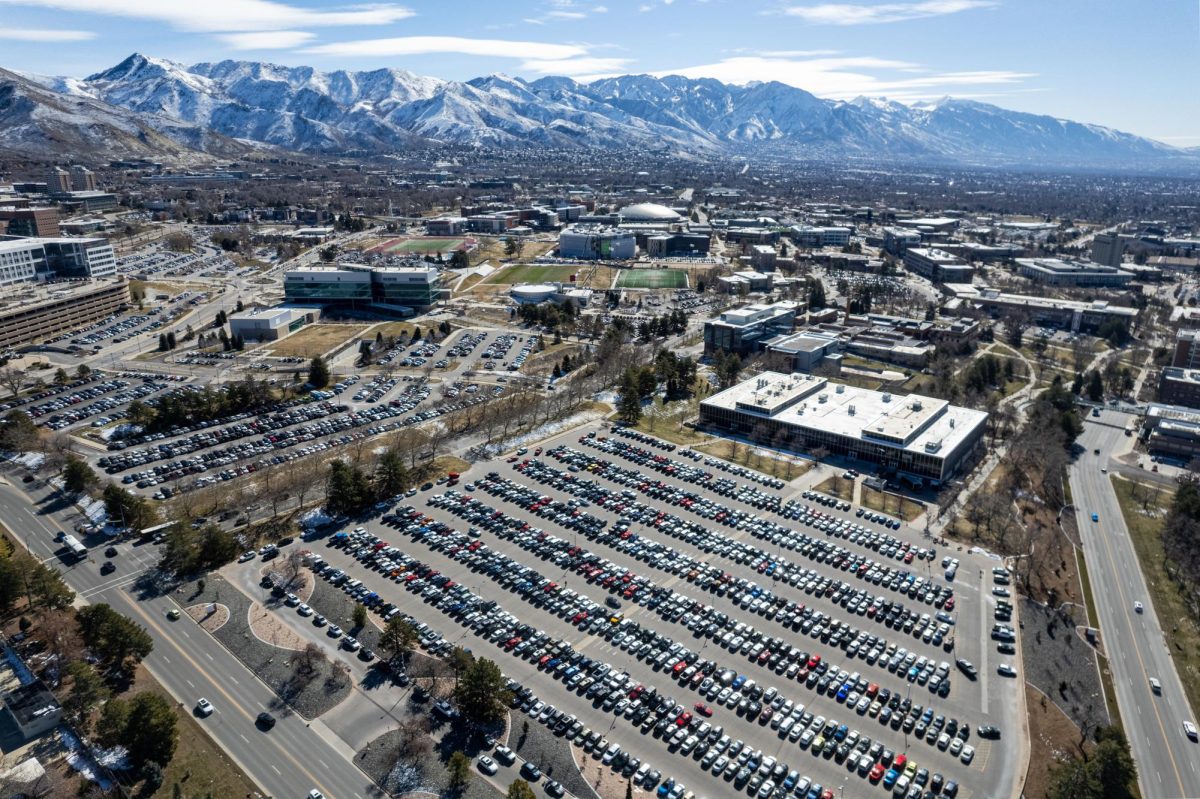
The University of Utah’s announcement of a new course scheduling policy, framed as a solution to the infamous parking problem on campus, has seen a curious progression since it came out in late August. They claimed that altering the current “stacked class schedule” by forcing departments to change many class times outside of the Tuesday/Thursday 9 a.m. – 2 p.m. timeframe.
Met immediately by thousands of social media comments and a petition advocating for the reversal of the decision, garnering over 7,000 signatures, the unpopularity of this decision has been clear.
Many students and community members voiced concern over the ability to work a job while attending the U if class times are more spread out.
Public opinion
Workers, faculty and graduate students have also expressed discontent, highlighting the increased workload that is being expected of many of them, without a pay increase. Some grad students have been asked to double their teaching load, from one class to two, in subjects they are not focused on or trained in.
In public comments following this opposition, university representatives have unsuccessfully quelled the masses by defending the decision wholeheartedly.
They’ve contextualized the many other supposed benefits besides parking, even downplaying the role parking had on the decision in the first place.
More recently, students and campus workers questioned the administration directly at the ASUU town hall, with concerns dismissed outright and no willingness for compromise or change.
This confusing course of events left me and many others with many questions regarding the intentions, direction and integrity of the university, but the U’s real intentions and priorities can be easily explained.
In the past few years, the administration has talked and published extensively about the strategic direction of campus life: they want to transform the U from a commuter school to a campus full of “college town magic.” A major initiative of this strategy is to increase the number of U students who live on campus rather than commuting from their homes in and around the Salt Lake Valley. In Board of Trustees meetings, they have spoken about turning “commuters” into “community.” While they hear the uproar about parking on campus, their only goal is to appease, while they continue to move away from the commuter model.
The benefits of these actions are clear if, like the U administration, your focus is only on campus profit and not student wellbeing or equity. Student housing is an easily profitable investment for the University. They’re able to charge students upwards of $10,000 or more per year for housing on top of the outrageous tuition costs.
This is why the university seems to have zero real solutions for the impossibility of parking on campus, not to mention the ever-increasing costs of parking passes and timed parking. Their entire strategic direction for the university is based around reeling in students who are able to afford (or go into debt to afford) on-campus housing, while leaving working-class students completely out to dry in a city with few other higher education options. This is why they disregard the contests in their recent change. The most impacted students are simply not on their radar.
Solutions
For those of us who have been organizing and advocating for change and student voice on campus, none of this is surprising. This falls directly in line with the way the administration refuses to meaningfully address student calls to take action to protect immigrant students, bring back resources like the Women’s Resource Center, Black Cultural Center and LGBTQ resource center, or to stop using our tuition money to fund weapons manufacturing and investment in war crimes committed by Israel.
Through these experiences, being reinforced in the current moment, Mecha has gathered that huge changes are necessary for this public university to start valuing the opinions of the community they’re supposed to serve. The university administration, whose actions indicate the prioritization of return on investment over student well-being or justice, and our corrupt state government cannot be passively allowed to make any decision they’d like. Students, campus workers and faculty must have a democratic say in the direction and decisions of the university.
Use this newfound anger, frustration and betrayal to build beyond the reversal of a single decision. Build coalitions between organizations, attend Board of Trustees meetings and petition through ASUU. Channel this into a movement for democracy on campus until these betrayals of the working class are halted, reversed and we develop a campus that serves people over profit.
Benji Park is a student leader with the group Mecha at the University of Utah.






JJ | Nov 20, 2025 at 2:44 pm
Several years ago, when an administrator over the U’s finances was discussing plans for a $100 million + allocation from the legislature for on-campus housing, I asked whether there had been any discussion whatsoever about seeking funding for commuting students to offset rising rents in the city/valley. I got confused silence. Your comment about the profitability of campus housing is right on. The incentive structure is clear.
Thelma Brown | Nov 25, 2025 at 12:24 am
Excellent article Benji. I am so proud of you and the fact that you are standing up for what is right! Keep the great work up!