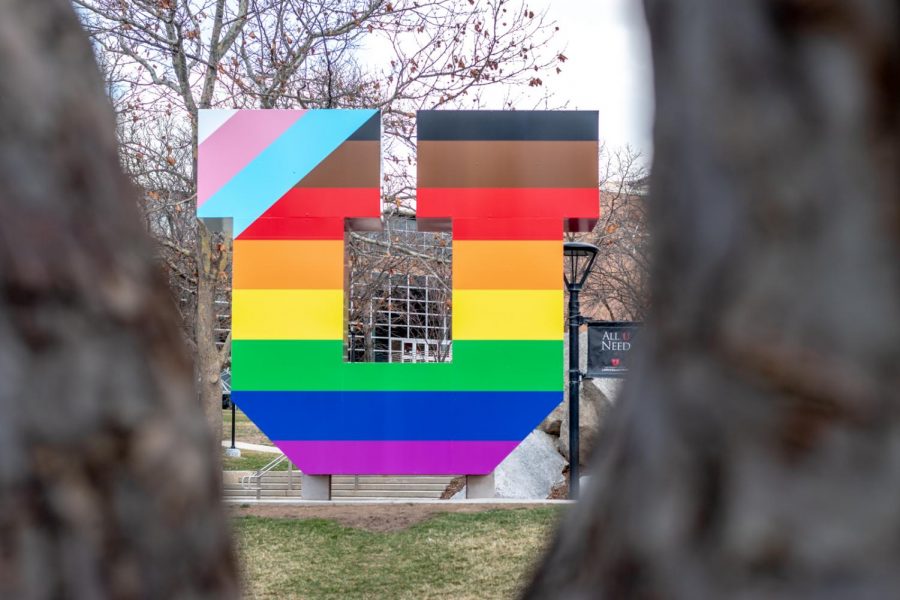
This article originally appeared in the Off-Script print issue, in stands November 2025. It has not been updated and some information may be out of date.
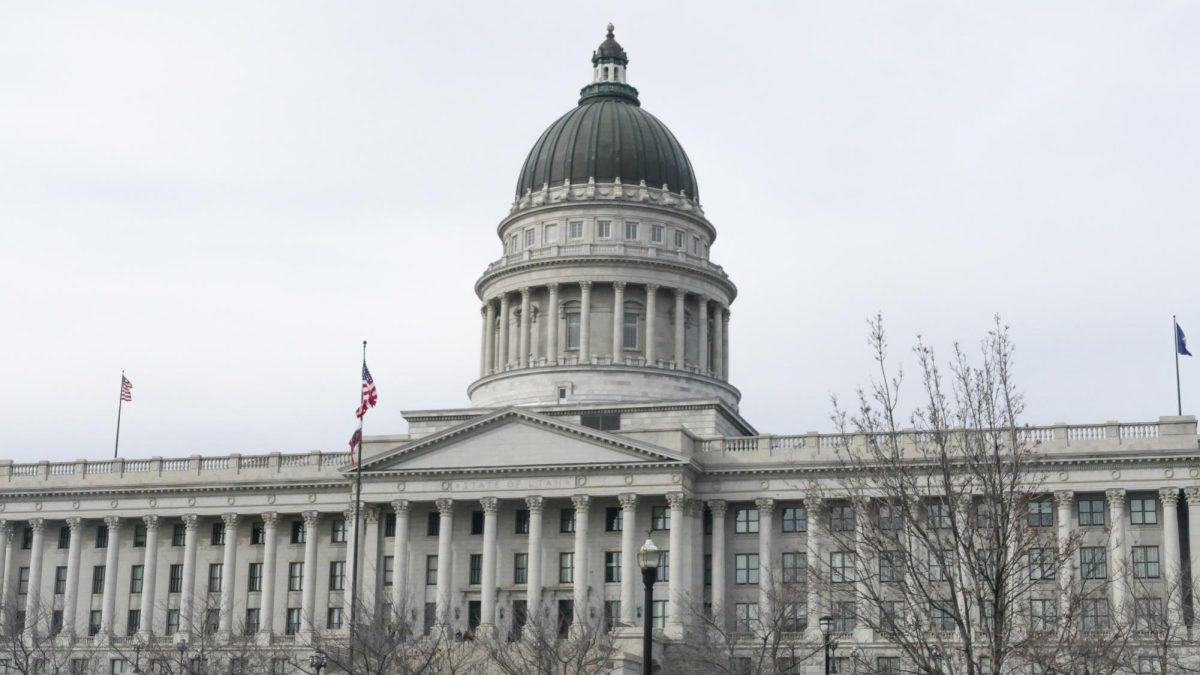
When the University of Utah closed the LGBT Resource Center in June 2024 to comply with Utah’s “Equal Opportunity Initiative” law, HB261, queer students at the U were left without a central place for support. According to the Utah State Legislature, HB261 is intended to “prohibit institutions of higher education, the public education system, and a governmental employer from taking certain actions and engaging in discriminatory practices.”
The LGBT center was closed alongside the Women’s Resource Center and the Center for Equity and Student Belonging. In the 16 months since the closure, both students and faculty have felt the impact.
The LGBT Resource Center’s closure
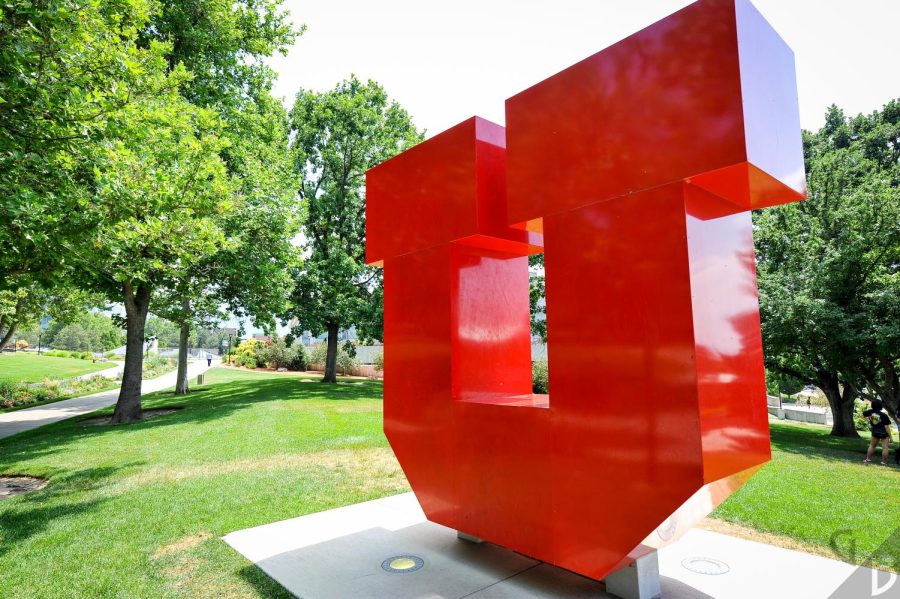
On June 20, 2024, the University of Utah announced that it would be closing the LGBT Resource Center. It was merged with three other centers into the Center for Community and Cultural Engagement (CCE). The CCE’s mission is to “support student well-being and success by providing pathways to vibrant community and culture through education and celebration of unique heritage, experiences and practices.”
LeiLoni McLaughlin was the associate director of the LGBT Resource Center from September 2023 up until the center’s closure. They are now the director of the CCE. They said staff at the LGBT Resource Center were given timely information about the closure and were offered new positions in the center’s absence. “It was always relayed to us that we were able to keep our jobs, at least, which was very reassuring,” McLaughlin said.
McLaughlin shared their opinion on the center’s closure. “I would say that it was necessary for the university to do this. Otherwise, what was at risk was student financial aid. That’s the unfortunate part that I think a lot of people don’t understand and aren’t talking about. If we didn’t comply, we would have lost a lot of state funding,” they said.
HB261 strictly prohibits any higher education institution from “establishing or maintaining an office that engages in certain practices” such as providing dedicated resource centers for any specific group of people based on their “personal identity characteristics.”
Psychology professor and Head of the Queer Alliance for Faculty and Staff Lisa Aspinwall also spoke on the center’s closure. “All of the centers that were closed always served all students equally and welcomed all students,” she said. “I strongly disagree that resources were being unequally allocated to students.”
Dr. Kai Medina-Martinez, the inaugural director of the LGBT Resource Center, said it helped students develop certain skills. “We’re talking about leadership, learning to write and present. These were skills that students who worked there and volunteered were able to acquire. They no longer have that opportunity,” Medina-Martinez said. “At the end of the day, who is this university really looking after? The university.”
The impact on queer students
In the wake of the center’s closure, queer students at the U do not have a specific place to go to for support. “The University of Utah was known for being very accepting of queer people [and] the queer community,” McLaughlin said. “Students are not sure where to find that type of representation anymore, that type of support, that type of community and connection. Everything right now on campus feels pretty generalized, and that visibility is really gone.”
While the CCE does provide students with a place to go, it does not have the same specific, tailored environment that the LGBT Resource Center did. “I am very impressed with the Center for Community and Cultural Engagement in bringing programming like Pride Week and LGBTQ History Week, but my concern has always been that people who are in a marginalized group need more than a couple of weeks,” Aspinwall said.
In 2019, the University of Utah was ranked nationally for its support for the LGBTQ student community. The U was not ranked in 2024. “This is not the same University of Utah that I left. It is very different, and it’s tragic,” Medina-Martinez said.