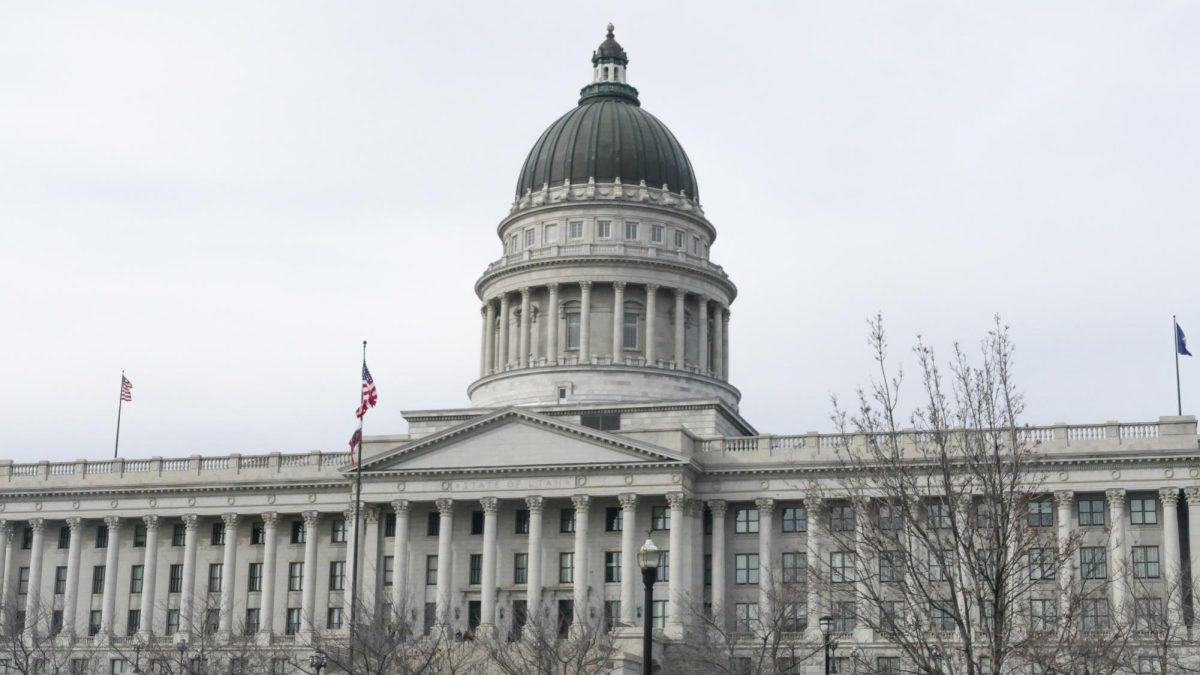
Gregory Kratz moderated the 2026 Truth in Tuition hearing on March 4. Gregory Kratz is the internal communications director at the University of Utah. This hearing is mandatory for Utah System of Higher Education (USHE) institutions to make adjustments to tuition in the upcoming academic year. The University of Utah Board of Trustees will vote on the proposed adjustments after the hearing on March 10. USHE will then vote on March 27.
The hearing featured presentations covering aspects and departments affected by tuition. Mitzi Montoya, the provost and executive vice president for academic affairs, began the presentation. “It is our goal to provide students access to a top-tier education that is of great value and prepares you for a successful life,” Montoya said. “In this economy, every dollar you spend is a sacrifice, and we’re very mindful of that.”
Student fee recommendation
The General Student Fee Advisory Board oversees the process of reviewing general student fees and make recommendations to the Board of Trustees. Alex Rose, the ASUU student body president, explained their recommendation for the hearing. “The only change to fees this year will be to cut the Computing fee by 10%. This decision was made after a thorough review by the student fee committee,” Rose said.
Rose clarified that there were no distinctive services to be cut and that this percentage reflected a general budget cut.
Tuition increase percentages
A change to Bursar payments made by credit cards will have a 3% service fee added and a 4.25% fee for international cards. This will include mostly tuition, housing and dining payments.
The university is proposing a tuition increase for the 2026-2027 academic year of 1.57% to 5%. This means that an undergraduate student taking 15 credit hours will see a tuition increase of about $85 to $271 increase per semester.
Where the money is going
Kimie Adamson, the associate vice president of finance for academic enterprise, explained the increase for three undergraduate colleges: Architecture, Health and Law. “Each one of these colleges are experiencing enrollment growth that needs student support, career and professional development investments and needs for special equipment or space,” Adamson said.
Adamson said the funds will support staffing and provide resources for students and eliminate some individual course fees. An increase in the tuition for the college of architecture will replace a $750 program fee per semester for four of its undergraduate programs with a “more transparent tuition structure.”
“Together, these proposals align tuition structures with instructional needs, infrastructure demands and workforce priorities while improving transparency and student support,” Adamson said.
The Legislature and funding
Tuition requests are proposed for five graduate programs in the business, education, engineering and health colleges. Adamson said increases are used to support student success and completion rates and address faculty promotion and retention. “The legislature is poised to approve a compensation increase for faculty and staff. When compensation increases are approved, the state passes 75% of the funding to us. We then cover the remaining 25% through tuition,” Adamson said.
A portion of the tuition increase will match legislative funding for compensation and other mandatory costs as decided in the state legislative session, which will end on March 6. “As the session is ongoing, it is unknown what we will have to match. That is why we have a range,” Adamson said.
Services and questions
The hearing moved into outlining the services offered by the U. These were organized into Student Services and Support, Student Health and Wellness, Auxiliary Services and Career Coaching and Professional Development. The presentation concluded with a brief Q&A session.
Lori McDonald, the vice president for student affairs, clarified that the University Counseling Center doesn’t have a limit to sessions for students covered by tuition and will not be affected in the upcoming academic year. “I expect that the trajectory we have been on to continue. The University of Utah brand is very attractive to students, so I’m expecting our growth to continue,” Paul Kohn, the senior vice provost for strategic enrollment and student success, said in response to a question on whether the tuition increase will impact enrollment rates.