Officials said Utah’s power grid needs to expand in order to accommodate more data centers, but grappled with environmental impacts. The Gardner Policy Institute hosted a Societal Impact Seminar on April 15 to discuss energy production, the environment and the local economy.
A researcher, Shon Hiatt, said the state’s needs for energy already exceed production, while eight new data centers will begin operating in the next two years. Utah’s challenge, Rep. Paul Cutler said, is producing “more energy cost-effectively to have these types of facilities.”
Energy demand
Hiatt, who is a professor and researcher at the University of Southern California, said national energy demand is growing by 2.2 times every year. Since 2010, the average energy consumption of a single data center has quadrupled. Simultaneously, “baseline generation” in Utah has been decreasing as a result of efforts to decarbonize the power grid, Hiatt said. “We’re closing coal plants, and we’re closing gas plants, but we were not replacing them with adequate amounts of power,” he said.
This imbalance is reducing power reserve margins, which increases the risk of grid blackouts, Hiatt said. According to current projections, Utah “is going to hit high risk by 2029, unless more power comes to the grid here,” he said.
Panelist Bill Anderegg, a biological sciences professor at the U, said tapping into the state’s geothermal sources could be the solution. “We have an amazing enhanced geothermal resource that has incredibly high reliability, and that’s especially throughout a lot of rural and southern Utah,” he said. According to Anderegg, Utah has the second-best geothermal resource in the country, paired with “cutting-edge research.”
Environmental impact
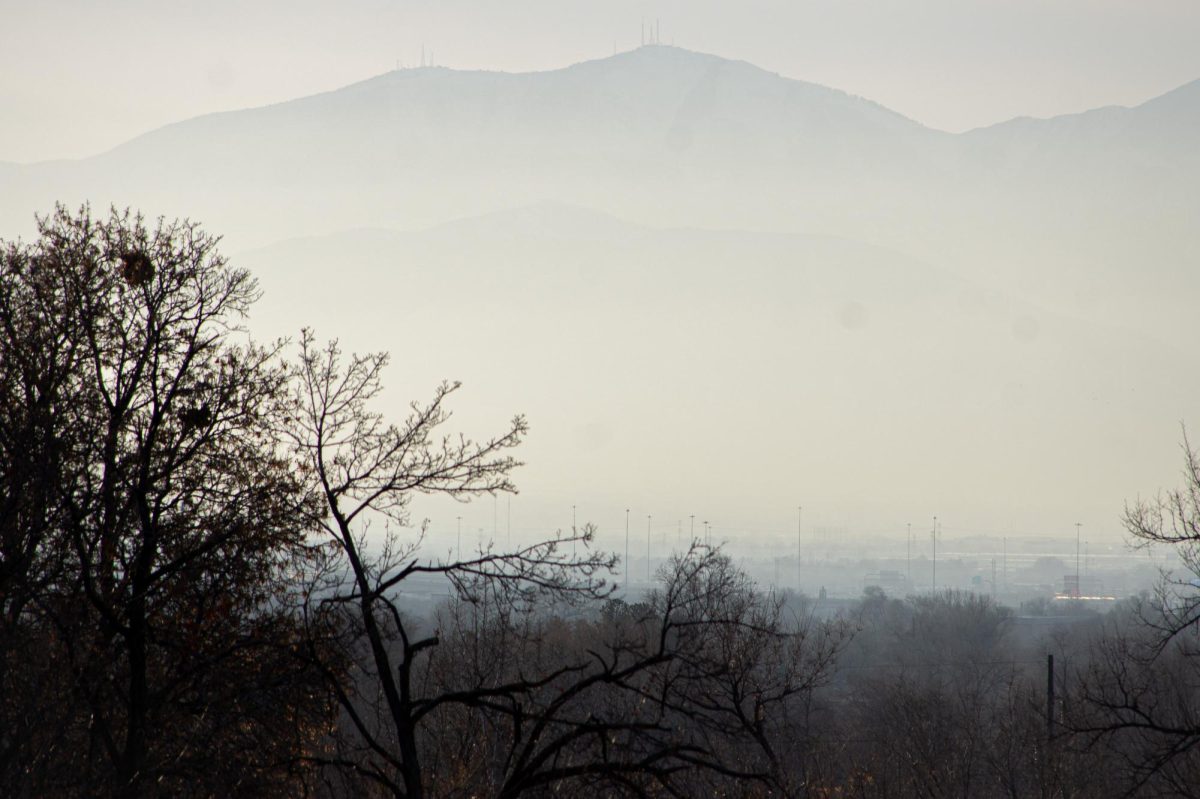
Cutler said the Legislature plans to allow a coal power plant in central Utah to operate again, with “cleaner coal technology.” Anderegg expressed concern for how drawing from carbon-based energy sources to supply data center demand will impact the environment, especially on the Wasatch Front. “If you power these [centers] with energy sources that are gonna emit a lot of pollution, that’s gonna be a challenge for quality challenges that we already face,” he said.
Hiatt said large facilities that use water-based cooling systems may use up to 2 million liters of water a day, which could supply 6,500 households. According to Hiatt, 43% of these facilities are located in areas “with extremely high water stress.”
On the other hand, cooling systems that use less water consume around 18% more energy. “It’s a trade-off,” Cutler said. “If you don’t produce more energy, then you have to use more water.” Cutler urged Utah to balance its energy regulation and use the most efficient technology. “We absolutely have to have more energy generation,” Cutler concluded. “But we need to protect our environment and local interests, especially water.”
Economy impacts
The panelists explained that the construction and operation of data centers in Utah would be a boon to the local economy. Hiatt pointed to the high asset value of data centers. “This could be a net positive property tax revenue driver for communities,” he said.
Cutler agreed. He added that data centers draw very little on community assets. “How would a community benefit from this? It’s simple: lower residential property taxes,” he said. Although some organizations, like the World Resources Institute, argue that data centers may induce “long-term public costs.” These include investments in water systems, roads and emergency services, which may no longer be beneficial if the center relocates.
Panelist Darin Knapp, vice president of Layton Construction, said building data centers also creates local jobs and boosts investment. He said to build one “campus,” a collection of several data centers, 4,500-10,000 workers attend the site per day. These construction projects also require circulating around 1,000 semi trucks per day. He said building data centers requires billions of dollars of investment.