With Utah’s primary election on June 23, candidates vying for the state’s newly drawn congressional district — one that heavily favors Democrats — have disclosed how their campaigns are funded. The numbers were published by the Federal Election Commission (FEC) earlier this month.
Three self-described progressives, State Senator Nate Blouin, Salt Lake City tax attorney Michael Farrell and former tech public policy analyst Liban Mohamed — who won the party’s nomination during the Democratic convention in April — are looking to defeat the race’s frontrunner, Ben McAdams, the last Democrat to represent Utah in Congress.
The Chronicle spoke with candidates Blouin and Farrell about their campaign finances. Neither McAdams, Mohamed or their campaigns responded for comment.
Strictly the numbers
McAdams leads the fundraising race with just over $1.9 million raised, as Blouin follows with just over $635,000, according to the FEC. Farrell and Mohamed trail well behind, having raised roughly $313,000 and $287,000, respectively — though both have leaned into their own personal funds to make up the difference. Farrell has put in $250,000 of his own money, between a personal loan and direct donations, while Mohamed has contributed just over $46,000 to his own campaign.
When it comes to individual donors, the trends are similar.
Utah law requires donations over $50 to be “itemized,” meaning the donor’s name must be attached and disclosed to the State Treasurer. Candidates have the option to itemize smaller donations as well, or leave them unitemized.
The FEC disclosures show McAdams has received just over $1,770,000 from individuals. Of that, over $1,500,000 are itemized donations, and roughly $202,000 are unitemized. Blouin has received just over $592,000 from individuals, with roughly $346,000 itemized and just over $245,000 unitemized.
Seeking donations
Blouin told the Chronicle he has built his campaign around small-dollar, individual donations with an average contribution of $40.
“We are largely raising money from individuals who are feeling the stress of an economy that is created by the corporations and the billionaire class that are funding other candidates in this race,” Blouin said.
Mohamed out-fundraised Farrell with over $231,000 from individuals, roughly $191,000 itemized and over $39,000 unitemized. Farrell has raised almost $43,000 from individual donors. Of that, over $42,000 has been itemized, while almost $600 is unitemized.
In an interview with The Chronicle, Farrell said being a newcomer to Utah’s political scene has affected his fundraising numbers. “I will say it’s affected my ability to get everything launched, like [Blouin] and [McAdams] both have built-in advantages of name ID, volunteer bases, donor bases, all that stuff,” Farrell said. “I started entirely from scratch.”
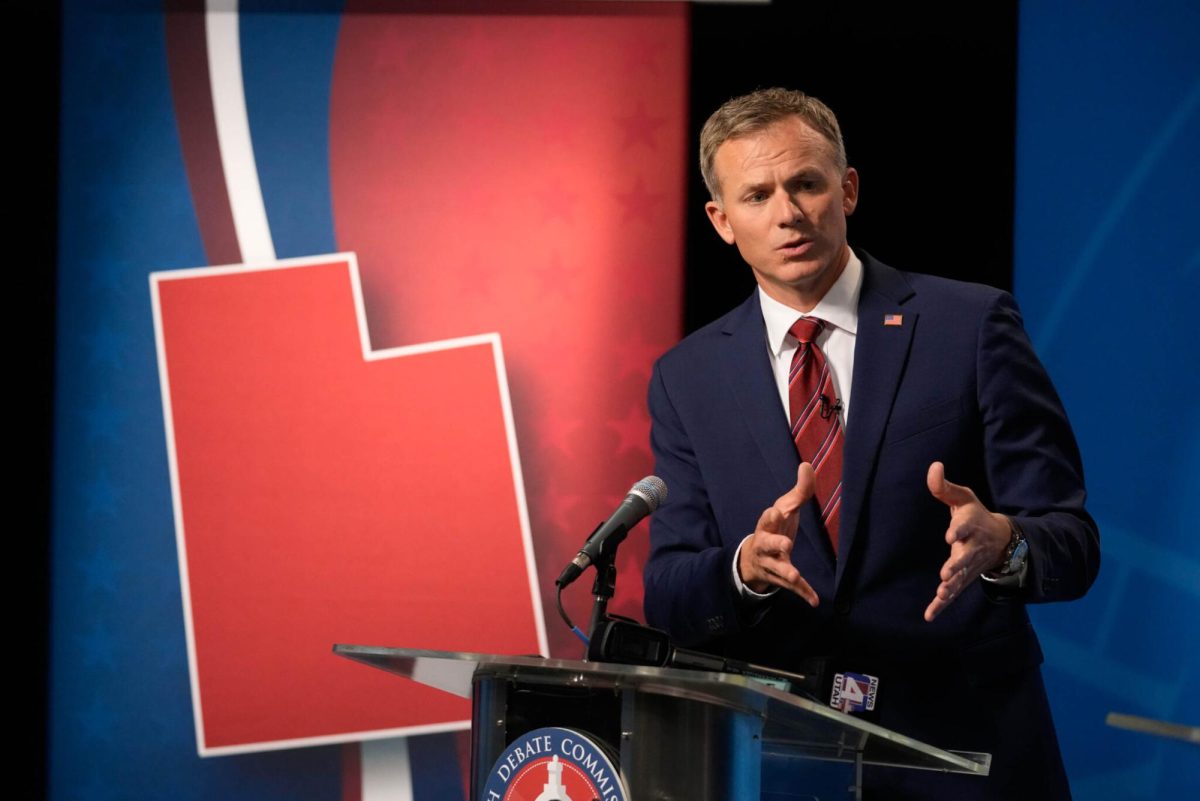
Accepting large donations from political action committees (PACS), Super PACs and large corporations has repeatedly sparked controversy throughout the race, including during last month’s debate.
“Ben McAdams has taken money from corporate PACs; Nate Blouin has taken a lot of money from non-corporate PACs, but to me it’s all the same,” Farrell said. “The idea of taking money from a PAC just because it’s not formed by a corporation, I think, is a little silly and naive.”
PAC controversy
Farrell has not taken any money from PACs, according to the FEC. McAdams has received over $142,000 from committee contributions, including PACS. Blouin has taken just over $43,000 and Mohamed has taken $10,000.
On June 11, Utah Political Watch reported $2,117,420 in outside money spent “supporting Ben McAdams.” The article did not mention the other three candidates.
Blouin pushed back on framing all PAC money as unethical, distinguishing between donor types he’s willing to work with. “If [the PAC] is mission-aligned and it’s not changing my perspective on anything, I’m happy to work with those sorts of folks to advance the cause that we’re fighting for,” Blouin said. “It is a little bit ironic to hear some candidates in this race saying they do not take PAC money, because what they’re saying is that they do not have the support of labor unions and other groups who are aligned with the cause that I am running for.”
Beyond the PACs
Blouin added that his campaign receives “some money from labor unions” — which function as PACs when supporting campaigns — as well as PACs like the James Fund Climate PAC and the Center for Free Thought Equality.
Instead, Blouin was more critical of outside spending groups tied to the race, naming the American Israel Public Affairs Committee (AIPAC), a prominent PAC, among others.
“You see it shaping our politics in a way that is disturbing … not just AIPAC, but they’re certainly a major player,” he said. “Not only is it bad for politics, but it’s also disingenuous in hiding where your contributions are coming from,” he added.
Blouin said neither of the other two progressives in the race is taking money he’d consider controversial, but criticized McAdams for the PAC money he has accepted.
“They’re using, you know, these straw man organizations like the Better Blue Fund that Ben McAdams is attached to, to solicit contributions and help candidates that are going to continue to support the military-industrial complex [and] support genocide,” Blouin said. “I think that’s really disturbing, and it’s almost worse than just taking the AIPAC or Democratic Majority for Israel, or some of these other groups directly, because [they’re] actually trying to hide it.”