After passing my fifth dead deer on the way home recently, it occurred to me that we have somehow built thousands upon thousands of miles of sprawling highways that animals have no way of crossing safely. There is no way they can ever adapt to miles of criss-crossing intersections, concrete spaghetti-bowls, stoplights and speeding, four-wheeled monsters.
And we think wildlife still roams free.
We have boxed it in just as we have boxed ourselves in-creating a grid of asphalt and concrete barriers around every piece of land. Think about it: four- or six-lane highways, hundreds of feet wide. They extend all the way across our country, from north to south, east to west and every other combination of those directions.
If a deer or moose happens to get across one of those highways alive and wanders down into our section of the grid, they immediately transform from beautiful creations of nature to safety hazards and threatening roadblocks. We remove them immediately. The wilderness only belongs in the sections of the grid that we have designated for it. Wildlife can be on display for the hikers and bikers, but we know that when it crosses over to our side, we should immediately call animal control to tranquilize and remove it.
I became fully aware of the incredible size and impact of our paved barricades after flying from Atlanta to Salt Lake City. Georgia was covered with huge forests extending as far as I could see. The roads were easy to spot, and they were everywhere-huge, leveled swaths of land among the trees for hundreds of miles. When I got to Utah, I realized that perhaps our roads are not as noticeable. We cut through high desert terrain, not trees, so perhaps we do not realize how ubiquitous the roads are in this state.
They are definitely noticeable, if you look. Our roads cut through our canyons, cordon off our lakes and rivers, and spiral up many of our mountains. And, in places where there are no roads, ATV riders carve new ones. We have paved over much of the land we so eagerly boast about to others; our open space is dwindling into small sections barricaded by roads.
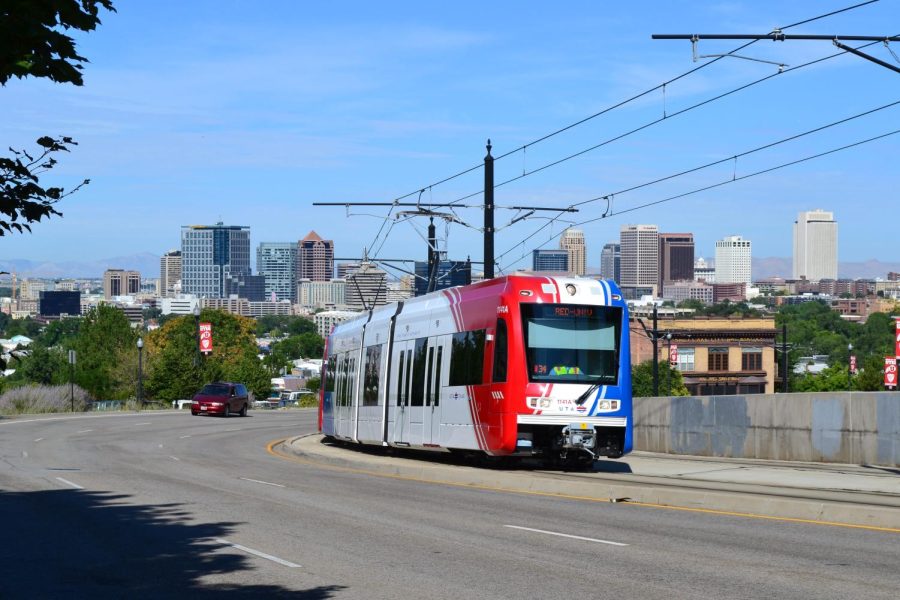
There is no room for more roads or the sprawling developments they create. There is room for additional public transportation systems, incentives to carpool, and fuel-efficient, alternative-energy cars. In addition to all these improvements, we need better road designs so that animals and the environment bear fewer consequences of our asphalt addiction.
Perhaps if we stop confining wildlife to smaller and smaller units of open space, we won’t confine ourselves as much either.