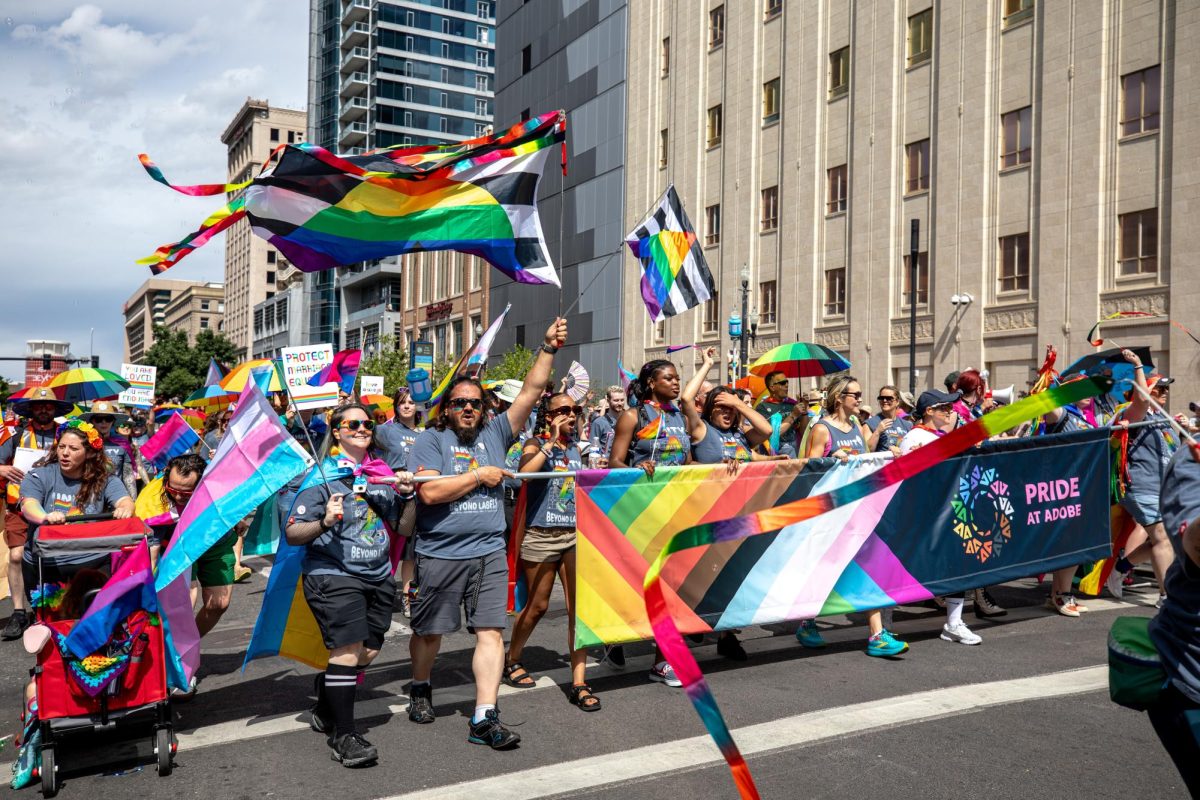
Thousands of people filled the streets in downtown Salt Lake City on Sunday, June 7, for the annual Pride Parade.
The parade began at 10 a.m. and went along 100 South from West Temple to 400 East before turning south and ending on 300 South. Spectators lined the route behind barricades while parade participants walked through downtown carrying signs and banners.

Parade overview
Over 120 local organizations, businesses, nonprofits, schools and community groups walked in celebration and support of the LGBTQ+ community. Notable entries in the parade include SLUG Magazine, Best Friends Animal Society, the Salt Lake City Mayor’s Office, Utah Pride Center Board of Directors and Salt Lake City Police and Fire Departments.


Utah Pride provided ASL interpretation, water and first aid stations. Participants in the parade and those watching from the sides of the road held banners, flags and wore clothing and costumes celebrating the event. Some groups in the parade had floats, specialized Pride banners and items to distribute to the crowd.

Utah Pride also held several events leading up to the parade. There was a Pride Rally & March and a two-day Pride festival in Library Square. The festival hosted food vendors, performers and markets.
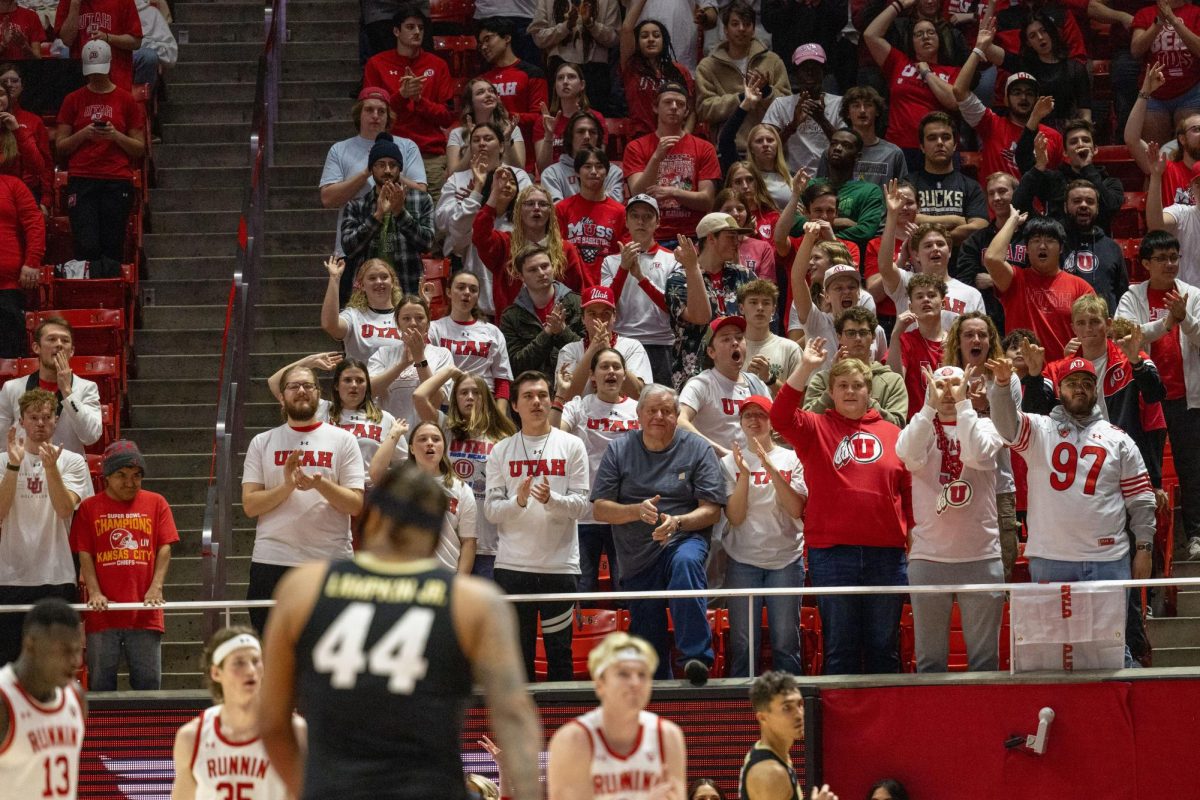
The University of Utah had its own section in the parade. Students, faculty, staff and alumni walked in celebration with the U. Participants who registered with the university received a T-shirt from the University of Utah Community & Cultural Engagement that said, “U Belong.”

University pride attendees
Parade participant and U alumna Andee Lyons said she believes events like Pride, especially with the university’s presence, create opportunities for community members to show support. “With everyone wearing the ‘U Belong’ shirts, it shows cohesion throughout the whole school,” Lyons said. “Having that many people walking together and wearing the same shirt makes [the university] feel much more welcoming.”
U student John Schefer said Pride provides an opportunity for community. “Pride has allowed me to find a community and express myself freely,” Schefer said.
For Schefer, walking with the U at the parade mattered because it brought comfort and an opportunity for self-expression. “Pride is important because it allows me to be who I am and feel comfortable at school and in my everyday life.”

Growth and participation
Lyons said the event goes beyond the LGBTQ+ community. “I think a big part of Pride is having everyone be involved, not just people who are part of the LGBTQ+ community, but families,” she said.
Schefer said that the number of people walking with the U was significant. “The amount of people here walking with you makes the space a more welcoming environment,” he said.

This year’s event seemed larger than it has been, Lyons said. She hopes participation continues to grow. She also specifically noted that the U’s participation in the parade was bigger than in 2025. “Compared to last year, the parade seems way bigger,” she said. “I hope it keeps continuing to grow bigger and gets more participation.”