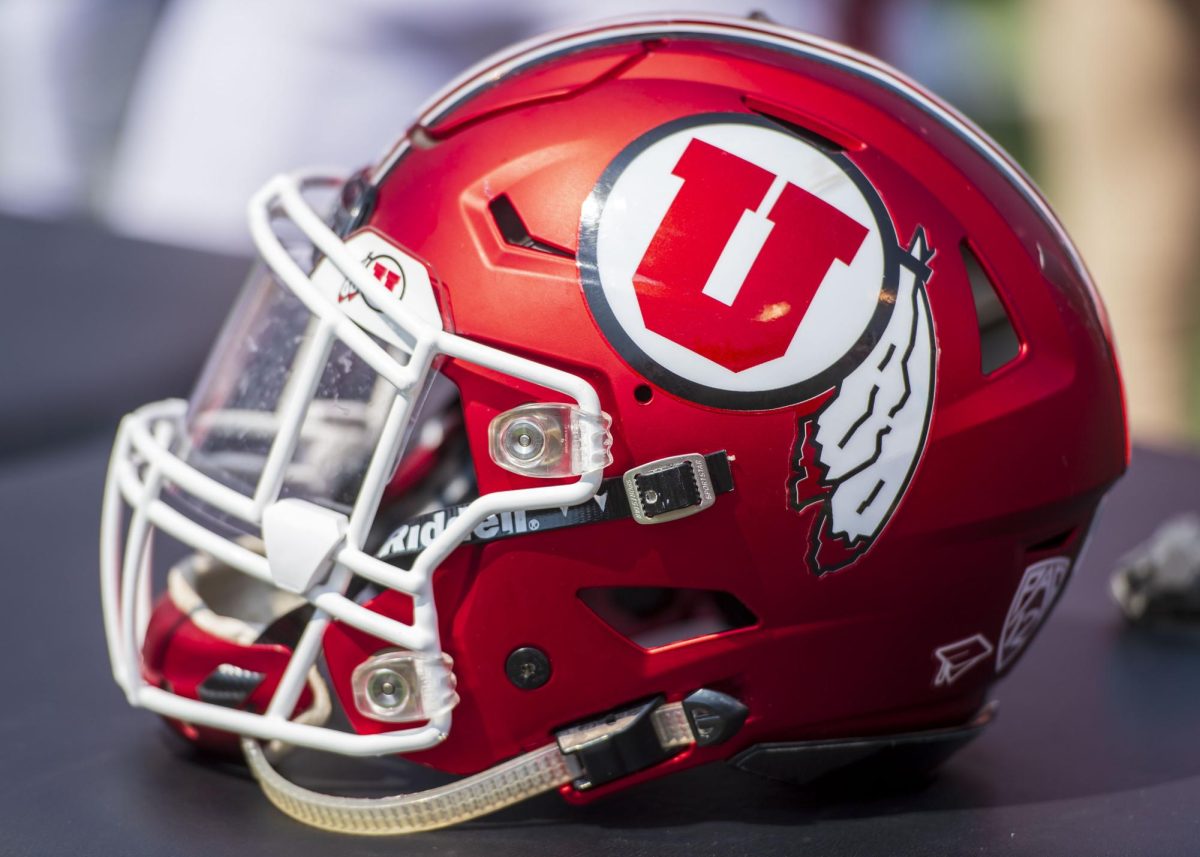
Perhaps no other indigenous groups in human history receive more contempt and obloquy than American Indians. All throughout American society, especially at colleges and universities, you see the names of American-Indian tribes used as logos and mascots for athletic teams. As we all know, the U is a willing participant in this tradition.
Because of these circumstances, it is ironic that the U is holding American-Indian Awareness Week this week.
Most people are aware that we use the proud and dignified Ute Nation as a logo and talisman for our sports teams. The fact that the U uses the Ute Nation for its symbols is, in fact, unimportant in and of itself. However, that the U still employs American-Indian symbols in an effort to rev up team spirit speaks to the larger insult that American society places upon American Indians as a whole. To take what some people see as sacred and commercialize it is insulting, regardless of how many permission slips you get. Indeed, how would Mormons feel if a collegiate sports team were named “The Joe Smiths?”
It really has nothing to do with sports, but with attitudes. Our history books teach us that white pilgrims arrived on North America and bought and traded with the indigenous populations peacefully. The Thanksgiving holiday, an American institution, is understood to be an exemplar of American Indians selling land for the Pilgrims to live on.
In his book The Manufacturing of Consent, intellectual Noam Chomsky tells a story about walking through a national park during the Thanksgiving holiday, and coming across a statue of an American-Indian woman.
The inscription read: “Here lies an Indian woman, a Wampanoag, who gave of herself that this nation might grow.”
Chomsky says, “Of course it is not accurate to say that she ‘gave of herself’ for that noble purpose. Truthfully, the inscription should read, ‘Millions of American Indian people were slaughtered in one of the worst cases of genocide in human history so that this nation might grow.'”
What would our response be if we went to Germany and saw a gravesite that read: “Here lies a woman, a Jew, that gave of herself that this nation might grow?”
It means nothing to simply say, “We are going to remember American Indians this week.” If the U faculty, administrators and students really cared about American Indians, they would demand that our logo be changed-not fight to keep it. We would learn about American-Indian history more than just one week a year-and we would become aware of contemporary American-Indian politics and fight to lift their plight.
The country’s 2.1 million American Indians-about 400,000 of whom live on reservations-have the highest rates of poverty, unemployment and disease of any ethnic group in America.
Arizona Sen. John McCain said, “Any objective observer would say that our treatment of Native Americans is a national disgrace.”
This disgrace is best understood by looking at one of America’s most well-known national landmarks, Mount Rushmore.
Atop Mount Rushmore sits the carved heads of Washington, Lincoln, Jefferson and Teddy Roosevelt. It’s a symbol of national pride and South Dakota’s No. 1 tourist attraction.
Few know this, but Mount Rushmore was erected over sacred Lakota Indian land that was stolen from a broken treaty.
In essence, the respect this nation has for its indigenous peoples is summed up quite nicely: It lies beneath the asses of four American presidents.
That is our awareness.