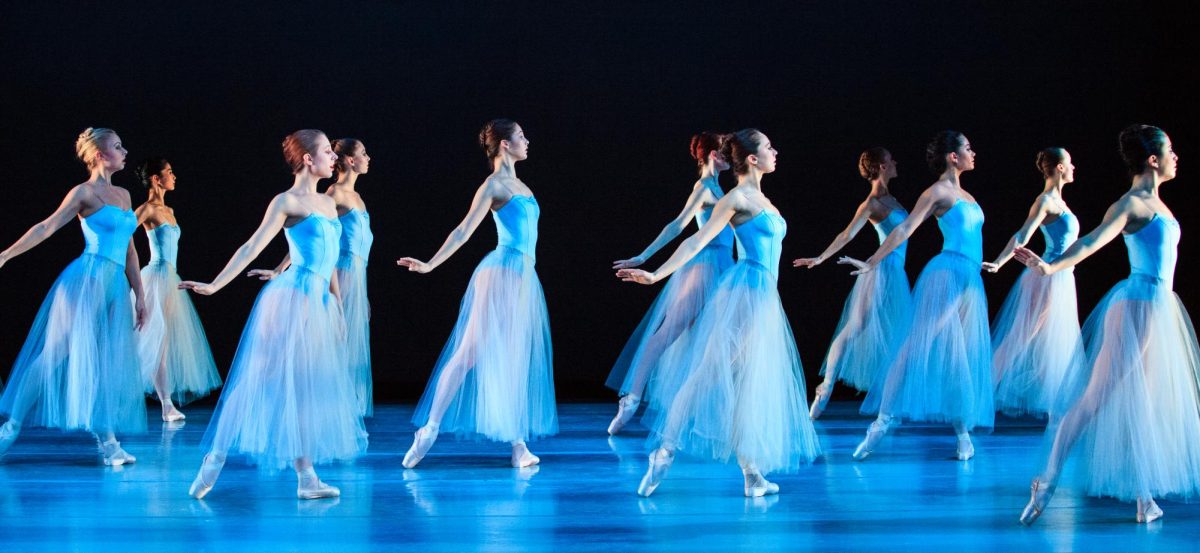
The University of Utah School of Dance is home to approximately 200 undergraduate students and 15 graduate students. Housed in the Alice Sheets Marriott Center for Dance (MCD), the program is part of the U’s College of Fine Arts, offered to students “seeking professional quality dance training and meaningful educational experiences in an array of degree programs.”
At the U, many dance majors also pursue a second major or minor. Approximately 46% of all fine arts students graduate with two majors. While students cite a variety of reasons for studying outside the arts, dancers told The Chronicle that the competitive nature of the industry, the typically short lifespan of a dance career, curiosity about other fields and the desire for a fallback plan all factor into their decisions to pursue a career beyond the studio.
Dance beyond the U
The U.S. Bureau of Labor Statistics‘ 2023 National Occupational Employment and Wage Estimates approximates 15,700 employed dancers and choreographers in the country. The estimated hourly wage for dancers employed by performing arts companies is currently $31.22.
A Drexel University study found that financial instability — common in the industry — often pushes college-educated dancers away from professional careers.
The dance world can be extremely competitive, arts students told The Chronicle. The environment creates immense pressure for dancers hoping to enter the professional world after graduation. Still, the U’s dance program holds a strong appeal for aspiring performers. The School of Dance ranks 13th on College Factual’s list of 96 dance bachelor’s programs nationwide. Caroline Connolly, a sophomore studying ballet and biochemistry, said she had danced pre-professionally throughout high school. “I had originally planned to retire after high school, but the allure of the ballet program at the U was too strong,” she said.
Keeping options open
Connolly said she considered focusing solely on her academic interests, but chose to keep dancing after her acceptance into the U’s top collegiate ballet program. She ultimately decided to pursue a double major, citing the competitive nature of the dance world after graduation.
“After my undergraduate program, I plan to pursue a PhD in biochemistry or molecular biology. While ballet won’t be my primary focus, I hope to keep it in my life,” said Connolly. “Dance is a highly competitive field and performing careers are very short. I think a lot of us double major in order to have a backup plan.”
BBC documentary “A Dancer Dies Twice” examines the often short-lived nature of dance careers. According to their research, many active dancers believe they will dance “for almost 10 years longer than is likely.”
“The difficulty of dealing with this may be amplified by a vast expectation gap in the art form around retirement age,” the documentary said.
Isabella DeCandido, a sophomore studying ballet and kinesiology, said her post-graduation plans “lean towards” a career in dance. “However, because of how competitive the industry is, I am still working very hard with my kinesiology degree to open other doorways post-graduation,” DeCandido said. She explained that from a dancer’s perspective, the profession is physically demanding and often unsustainable long term. Pursuing a second major, she said, gives her a pathway to a career after her time as a professional dancer ends.
The future of the dance industry
Dance is physically demanding on one’s body. Surveys from the National Library for Medicine show that eight in every ten dancers experience a serious injury every year. The highest rate of injuries among professional ballet dancers currently sits at 85%. “Most dancers’ careers are short-lived due to how physically demanding the job is. Having a backup major gives you freedom and options once your dance career has concluded,” DeCandido explained.
Brooke Baldwin, a sophomore studying ballet and kinesiology, said injuries are a concern for her. “I’m thankful to have a healthy body that lets me dance, but injuries are unpredictable,” she said. Baldwin added that many of her friends and colleagues in the U’s dance community choose majors or minors that complement their training, hoping to broaden their career options in an increasingly competitive field.