“You can take Alice in Wonderland so many different ways. You can be camp, you can be elegant, and that’s what’s so incredible about it,” Anna deGuzman, junior and CEO of the Fashion in Business (FIB) club, said. She emphasized the importance of teamwork and letting others’ creativity shine through in order to create a successful production.
Audience members were dressed eccentrically. Two elevated runways extended from the stage into the audience seats. Each designer introduced their collection through a video with a maximalist set projected as the backdrop before the models started walking. The background image set the scene for each collection as the models walked to a song of the designer’s choice, ranging from pop favorites such as “Everything is Romantic,” by Charli XCX, to slower classical pieces. The drag club performed before intermission.

Designers
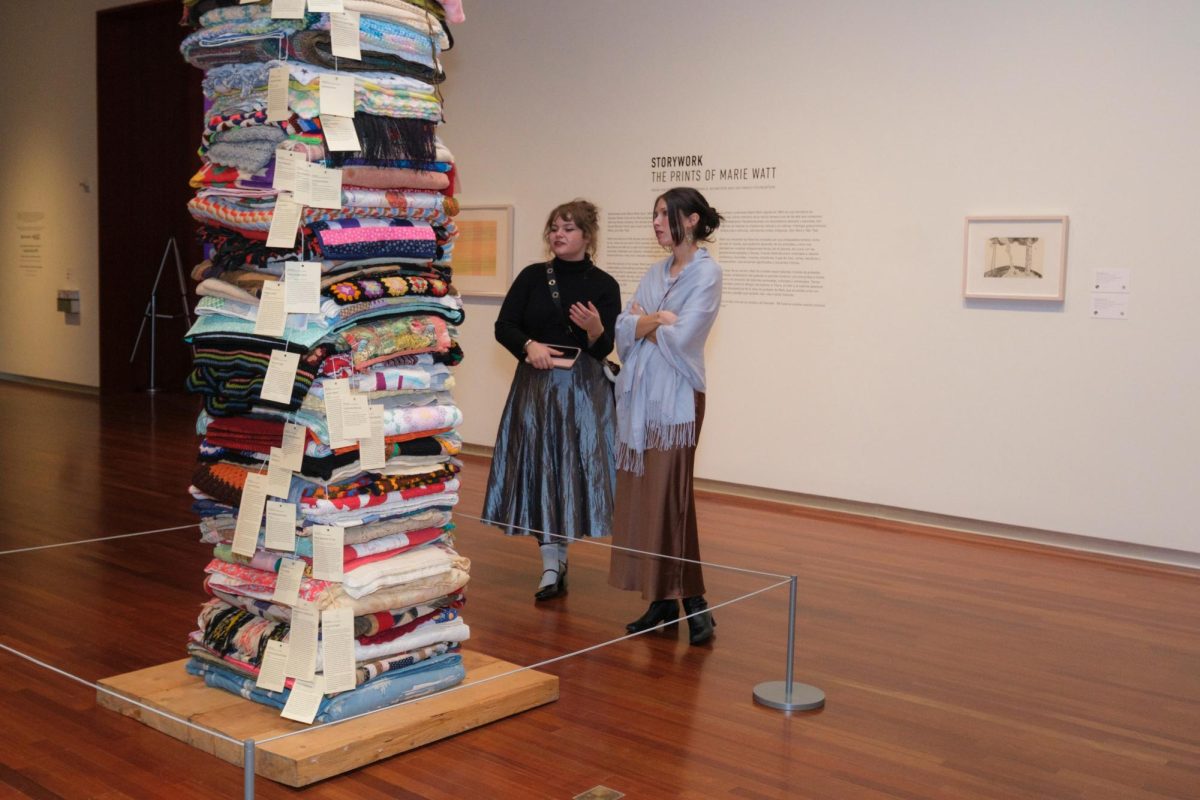
Many designers were inspired by their family members or international styles. Br.ynn was inspired by her grandma’s quilt. Reduce Rios Recycle was inspired by their brother, who asked them to make a hoodie out of upcycled jeans. House of Kefi looked toward both ancient and modern Greece for inspiration. C0wboyyy borrowed from London styles. Eloonie drew from Japanese culture. Anna Claire used the children’s book series “Fancy Nancy” as her focus.
Jake Whelan reworked men’s formal wear. He was inspired by the new romantic movement in London and the neo goth look during the AIDS epidemic period. Whelan had big visions for his designs, but found the technical execution to be challenging. With only a year of sewing experience under his belt, “figuring out how to make frills … and working with leather has been super tricky.” Whelan learned determination and grit while teaching himself how to construct clothing. While his collection was on the runway, one of his models opened a dollhouse they carried to reveal large text on the inside that said, “protect the dolls.” He hoped his collection would inspire the audience to learn more deeply about the time period he designed around.
Michael Petrogeorge modeled and designed with his sister, Christie Petrogeorge. He said their biggest challenge was “when you have something ready, and then you have your model fit into it, and it doesn’t go exactly how you thought it was going to be, it kind of changes the way you have to think about it.”
The whole process took much longer than Petrogeorge expected. “It doesn’t just happen in a day. I thought we were going to be able to get these out in a week or so, but it’s taken us over a month or two just to sew everything together. It’s a big-time commitment, for sure,” he said. He hoped this project would contribute to both his and his sister’s creative portfolios.
Sustainability
“It’s so possible to make these kinds of things happen, and it’s also very possible to do it sustainably, whether that’s for the environment or towards our community,” said Emma Barlow, COO of FIB.
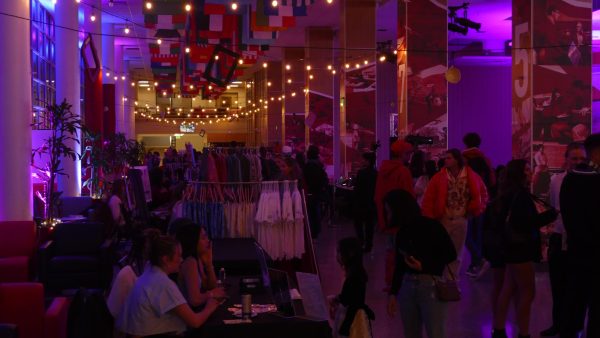
Sustainability and teamwork were at the forefront of the FIB show. It was largely funded through a $10,000 sustainability grant from the Sustainable Campus Initiative Fund (SCIF). This required all of their fabric to be purchased either secondhand or locally. Many of their decorations were sourced from a partnership with the SLC Fashion Show.
“I’ll either throw clothes away sometimes, or I’ll usually donate them, but I’ve never really tried to upcycle them,” Jeonna Coker, an audience member, said. Reduce Rios Recycle’s collection changed her mind to make more sustainable fashion decisions and buy from small businesses.