Ethan Hanna and Paisley Jensen have two different stylistic approaches to political art, but they both share one message — “ICE Out.” Their art is not only in response to increased immigration enforcement presence but also informs their community about resources available and actions they can take in resistance.
Ethan Hanna
For graphic designer Ethan Hanna, political art is bold and at times aggressive. “When I see policies affecting families in my city, I feel it. I carry that into the studio. I design to respond, not to stay neutral. If something impacts my community, I put it on the wall,” he said.
His artistic style focuses on bold typography and concise messages, designed to be understood instantly. Hanna also includes testimonies from people directly affected by immigration enforcement. “Their words shape the next designs,” he said. By reflecting lived experiences, he hopes to prompt viewers of his art to think and feel uncomfortable. “Enforcement is not abstract,” he said. “Families feel stress and fear in real time. I want viewers to sit with that. I want accountability and awareness.”
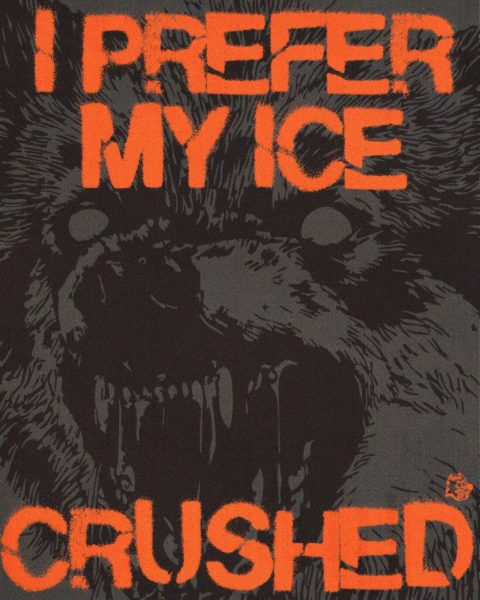
Hanna wheatpastes posters along protest routes, passes out prints at rallies and uploads digital versions for others to reproduce at home. “When someone walks past a wall and stops, that moment feels real,” he said. “I like treating it like a zine or a stencil, super easy to replicate and put up everywhere.”
Public reaction to Hanna’s striking approach has been mixed but engaged. “Some people tell me the work says what they feel but struggle to express. Others disagree and defiantly let me know,” he said. He values the opinions and participation of others because “it shows the work lives beyond a protest.”
Paisley Jensen
Paisley Jensen has been drawing her entire life, but her work shifted once she decided to include her political views in what she made. “My art wasn’t always political, but I think as I grew up and started learning about art history, which was inherently political, I was drawn to that,” she said. “I realized it’s nice to put your values into what you’re drawing as well.”
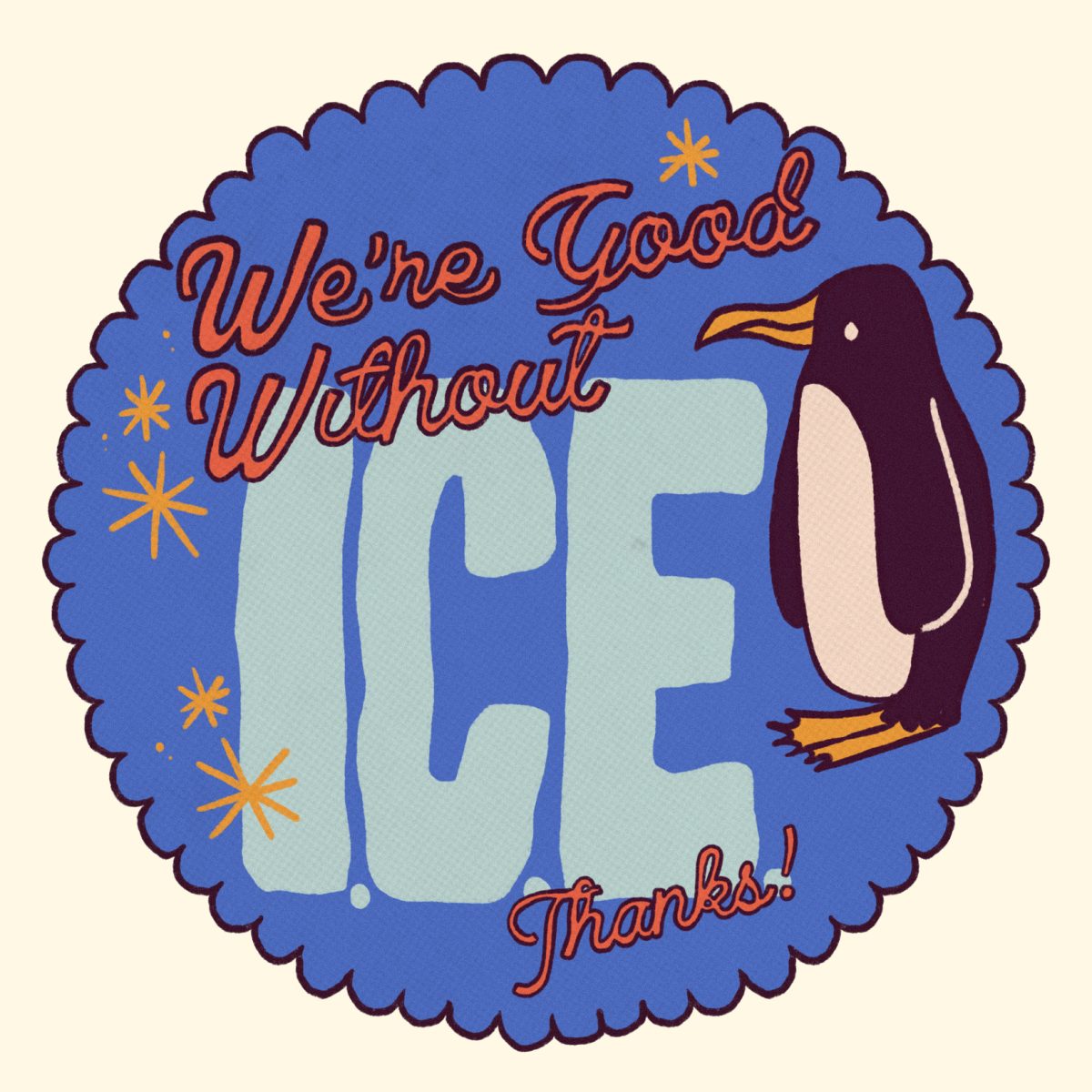
Jensen has created art for many different causes, such as National Park protection, LGBTQ+ communities and Indigenous Women’s Resources. But ICE’s recent actions have hit especially close to home for Jensen, “My family is immigrants, so I’m very passionate about anti-ICE,” she said.
Her artistic style draws from political cartoons, which inspired her to create art that can communicate complex political topics in a digestible way. “It’s a very light-hearted take on a very non-light-hearted situation,” she said.
On her Instagram page, she posted an infographic sharing ways the public can continue to fight ICE, whether that’s through simple reflection or calling local representatives.

Her designs use bright colors, simple phrases and oftentimes cartoon animals to share her political views, “My purpose as an artist is to take in the world that’s around me and put it into how I perceive it and hope that others can take from it,” she said. “We live in the world, and you’re not going to get away from it. I think it’s important for me to create relevant art.”
She displays her anti-ICE artwork throughout local businesses in Salt Lake City in the form of stickers, easy to display on a computer or car windshield, which increases visibility.
Jensen says her work is guided by the phrase “art is a rebellion.” She views political art as a deeply important part of portraying and forwarding social change.” Art is how we understand things from the past and even politics,” she said. “Artists have a special platform that they should use.”