This article originally appeared in the Resolutions print issue, in stands February 2026. It has not been updated and some information may be out of date.
Aug. 3, 2023 was a life-changing day for current University of Utah freshman Aven Elsberg. Two weeks before Elsberg planned to start university studies in 2023, he began a two-year rehabilitation time to recover from a life-altering injury.
Elsberg had been competing in a mountain biking competition called Crankworx Whistler the week before the incident with world-class athletes from all around the world. Elsberg, an up-and-coming mountain biker, competed in the enduro and downhill races located in Whistler. The week after the races, he was biking home with some friends on an unsanctioned and complicated trail. Elsberg was familiar with it due to his background and experience in biking. He misjudged a turn, lost control of his bike and crashed over the handlebars. The impact on Elsberg’s head and neck resulted in cervical spine and spinal cord injuries. Elsberg was transported on a medevac helicopter to Vancouver General Hospital, where he was put on a ventilator and under the complete supervision of hospital staff for three months in the intensive care unit. He was then transferred to GF Strong Rehabilitation Centre, where he spent around six months in recovery.
Although Elsberg claims the break itself did not cause him any pain, he describes the sensation afterwards and the next nine months as “the most pain I have ever been in.” He says his recovery was long and exhausting, marked by physical discomfort, emotional challenges and moments of uncertainty. Simple tasks that he used to consider effortless, like eating or even just breathing, became difficult to even think about. Each day Elsberg spent at rehabilitation required both physical strength and mental toughness as he relearned movements and worked toward regaining independence.
Now, Elsberg is currently studying mechanical engineering in hopes of making medical and adaptive equipment for people facing similar physical setbacks like him. Elsberg still mountain bikes and skis with the help of family members, usually his sister, University of Utah freshman Quinzee Elsberg. Designing a new life for Elsberg means continuing to have fun and do things that interest him despite his disabilities. His family and modern technology allow Elsberg to do so.
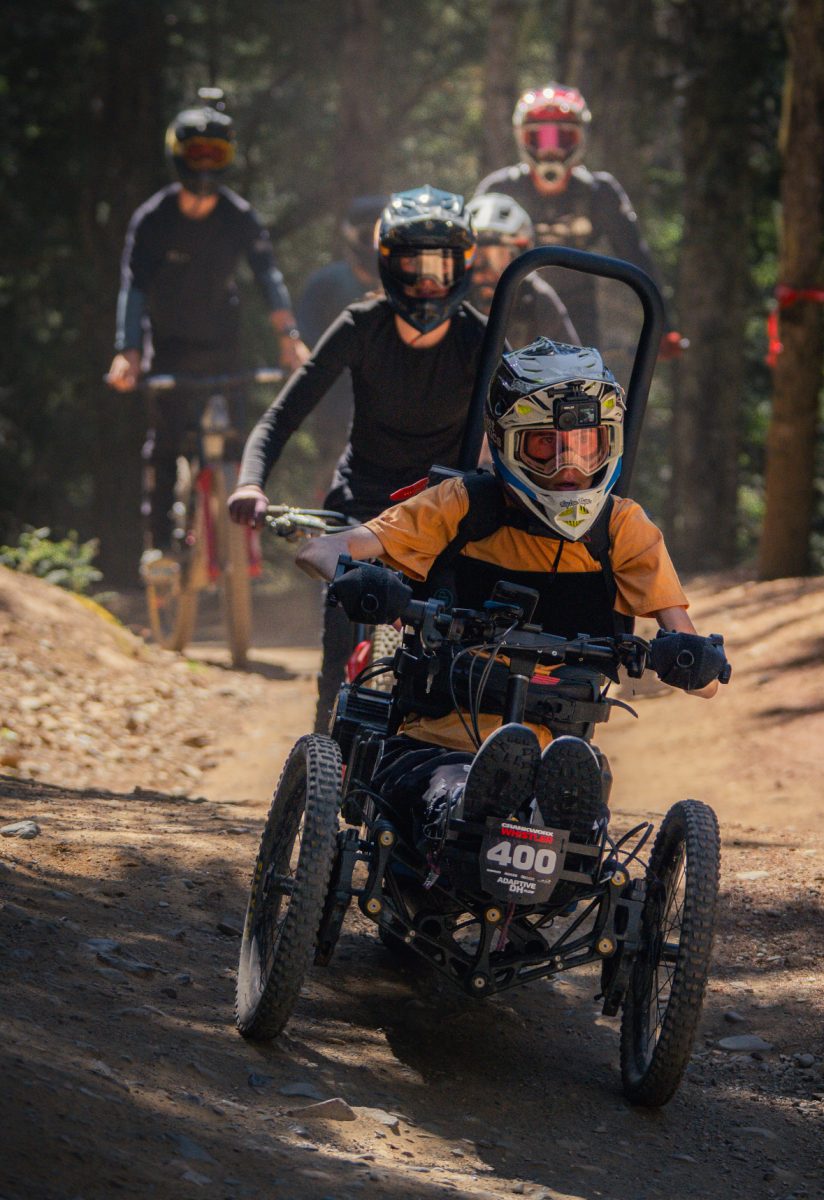
Due to Elsberg’s resilience and tenacity, he continues to do the things he loves and inspires everyone around him. In fact, Elsberg attended and competed in Cranxworx Whistler again two years after his accident as the first quadriplegic to ever participate. While attending the University of Utah, Elsberg goes skiing and mountain biking frequently, as time and weather permit.
Elsberg’s return to Crankworx Whistler marked more than a milestone in adaptive sports — it symbolized his refusal to let a single moment define the rest of his life. The preparation Elsberg completed for his race involved extensive physical strength, but also extraordinary mental endurance. Elsberg is a clear and perfect example of what the U aims to educate through its values.
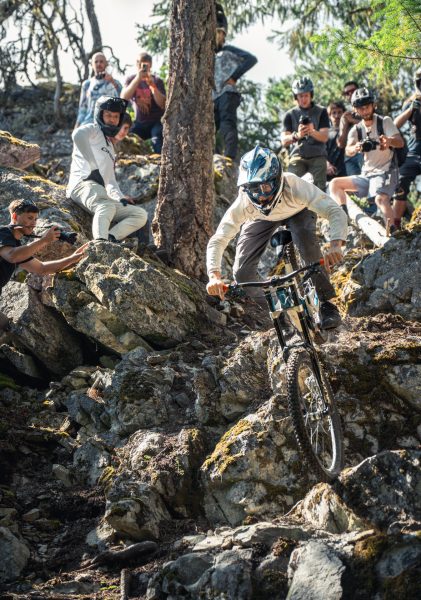
Balancing rigorous rehabilitation with schoolwork has not been an easy task for Elsberg, but he attacks both with the same work ethic that inspires him as an athlete. His interest in mechanical engineering is his way of giving back to his community by applying his own experiences with innovation to make products that would benefit others like himself. What seemed like an end is now an entirely new beginning for Elsberg.
Elsberg decided to learn how to do the things he loves adaptively. He actively participates in adaptive sports rather than spending years and energy trying to regain his ability to walk. Many people who face injuries that take away their ability to walk spend years or the rest of their lives trying to regain the ability. Elsberg decided to change his definition of progress from how close he could go back to the life he had known before his injury to an entirely new definition based on how well he adapted to the limitations of his injury through involvement with adaptive sports. By focusing on adaptive sports, Elsberg is not only using his time and energy to develop strength and self-confidence but also to develop a sense of independence so he could live fully in the moment. Elsberg doesn’t see adaptation as a limitation; he sees it as a means of going forward, with an emphasis on ability versus comparison and satisfaction versus conforming to expectations of others.
The story of Aven Elsberg is one of resilience and hope. His experience is a testament to the fact that when people face adversity, sometimes their greatest strength is discovered through their worst possible outcome. Elsberg’s determination has reminded students and athletes alike that despite facing failure and disappointment, their ambition and passion for living are never diminished.