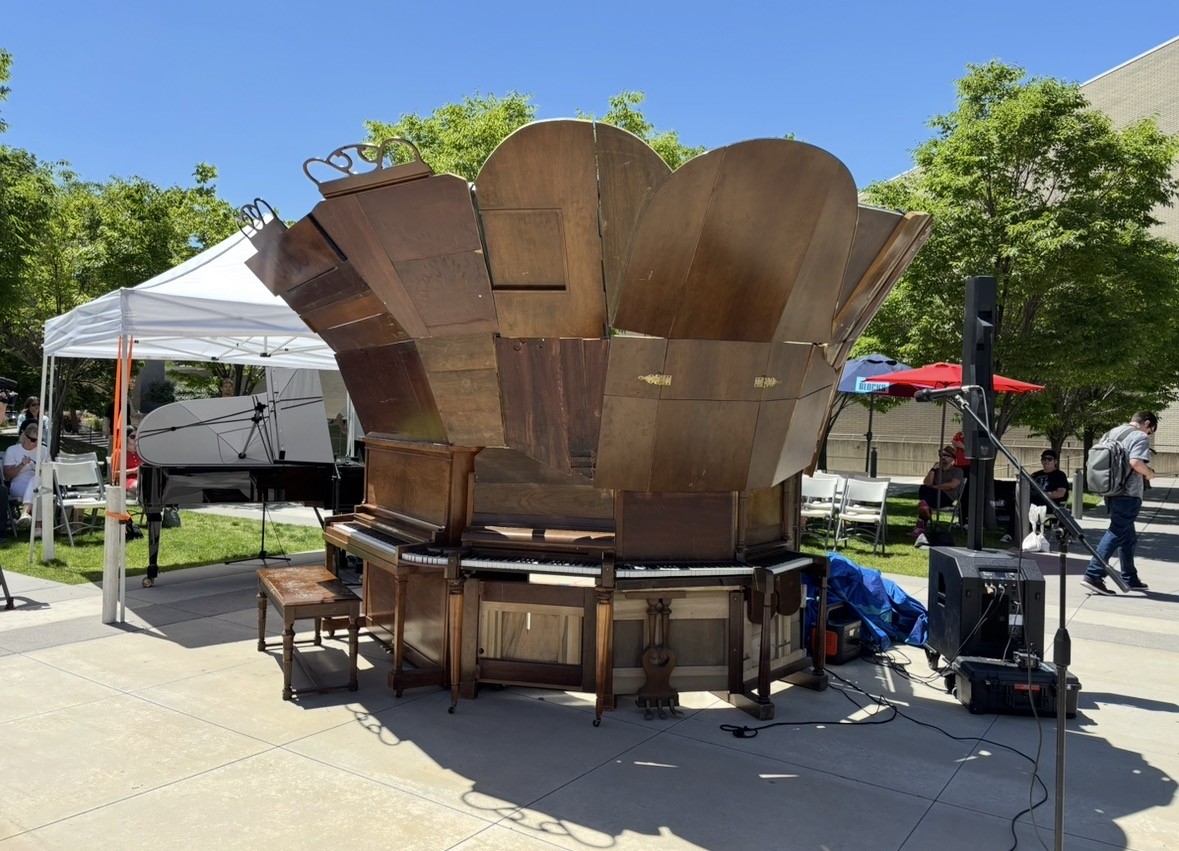
Classical music is a visible and sustained part of Utah’s culture, supported by strong public school programs, family encouragement and religious traditions. From elementary recitals to performances by the Utah Symphony or Candlelight concerts, this art form continues to connect various generational communities and bring people together in the state of Utah.
Local musicians say Utah’s standards of early exposure, community involvement and cultural emphasis on music education help explain why instruments such as the violin remain especially popular. They also say classical performance continues to foster connection in an era dominated by digital media.
Jane Loveland, a local pianist who began playing when her parents signed her up with a piano teacher who they went to church with, said classical music did not feel niche growing up in Utah. “Going to performances by the Utah Symphony or community orchestras was just something families did,” Loveland said. “It feels supported here.”
Early exposure shapes long-term participation
Loveland said strong school orchestra programs introduce students to string instruments at a young age, while parents often remain involved throughout their children’s musical education. “People genuinely show up for each other’s recitals and concerts,” she said. “You have to listen deeply in the orchestra and it builds trust fast.”
Bennett Winegar, a musician who first studied violin in elementary school before focusing on piano and French horn, said he was consistently drawn back to the instrument. “I think the violin creates music that most closely resonates with the soul,” Winegar said. “It’s a strong example of humanity by seeking only to create beauty.”
Winegar said Utah’s musical culture is influenced in part by religious traditions that emphasize congregational singing and instrumental performance. Exposure to structured sacred music at a young age, he said, often leads to familiarity with classical forms. “People are often encouraged to pursue musical hobbies in their social circles,” Winegar said. “That support leads to more involvement.”
Community spaces reinforce musical tradition
Winegar is also a staff member at Utah’s local violin shop Day’s Violins, a local string instrument shop that serves players of varying ages and experience levels. According to Winegar, customers range from professional musicians testing antique instruments to beginners as young as 3 years old.
“It’s not uncommon for children as young as three to start,” Winegar said. “Often it follows a family trend, or parents want to give their child an opportunity they didn’t have.”
In 2026, when much of music consumption occurs through streaming platforms and social media, Loveland said live classical performance offers a different experience. “It forces you to slow down,” she said. “In a fast, digital world, sitting in a concert hall is grounding.”
Winegar said ensemble performance also strengthens connections because musicians depend on one another to achieve. “Everyone depends on everyone else,” he said. “There is a layer of trust in realizing a goal that doesn’t exist anywhere else.”
Historical roots shape Utah’s classical tradition
Utah’s historical relationship with classical performance has also been documented in academic settings. According to a Utah State University’s Leonard J. Arrington’s lecture given in 2017, Arrington examined the development of opera in the state, tracing how vocal and sacred music traditions among early settlers contributed to the growth of formal classical performance.
The lecture highlighted how choral singing, tabernacle performances and later opera productions became woven into Utah’s cultural identity. Scholars involved in the event said that exposure to structured vocal and instrumental music helped shape artistic education and community life in the region, reinforcing the role of classical traditions in Utah’s historical development.
Winegar said classical music may require more effort to appreciate than popular forms, but he believes that effort increases its value. “Art that takes effort to understand is often pushed aside,” he said. “But the benefits are higher because it took work to get there.”
Loveland encourages those unfamiliar with classical performance to attend a live concert. “Go hear live strings just once, maybe even the Utah Symphony and sit close enough to feel the sound,” she said. “You might be surprised how moved you feel.”