Film, the so-called “seventh art,” has been around for over a century now. Despite its short existence, cinema has had an undeniable impact on human culture, fundamentally changing the way we see each other and the world around us. Few other mediums are as capable of communicating experiences as well or as powerfully as the moving pictures, and it’s for this reason that they are so important to so many of us.
Film history is an especially rich and rewarding adventure, embodying many of the great debates and ideas that draw people to the arts in the first place: art vs. commerce, intent vs. interpretation, auteurship vs. collaboration, etc. With more films available to more audiences than ever before, there has been no better time to begin exploring the canon.
That being said, many people of all ages and backgrounds may struggle to see the importance of film history, or of watching older films at all. It’s easy to dismiss many of the seemingly dusty classics as irrelevant, confusing, problematic, or simply boring. While perhaps warranted in certain cases, anyone with an open mind can gain something from spending time with the Great Films.
At the movies with the film faculty
In that spirit, The Daily Utah Chronicle spoke to two professors of film and film-related arts here at the University of Utah, Dr. Chris Lippard and Professor Sam Boyer. Lippard is an expert in the cinema of the Middle East and has held a variety of faculty positions here at the U.
Describing the emerging crisis in media literacy, Lippard began: “I think that, for students today, it’s really kind of important for people to have a sense of film history, just to avoid this rather disturbing tendency … that the world is getting better all the time. I think there’s very little evidence for that.”
Lippard came to film a bit later in life, during his Ph.D. at the University of Southern California. In his words, his interest in cinema, especially the Silent Age, began at least in part with good professors who knew how to connect with a classroom. In other words, they made classic films feel alive and relevant.
Learning to appreciate the classics
As Lippard pointed out, it is often the case that the more things change, the more they stay the same. The classics are the classics precisely because of their universality: as much as they are products of their time and place, many of the best films survive due to their ability to speak to a wide variety of audiences across the generations.
Even if one agrees that watching older movies is valuable, what is to be done? It’s easy to feel intimidated by the sheer breadth of cinematic history. Perhaps you’ve tried venturing outside of your comfort zone, but what was promised as a rewarding experience left you feeling cold, or like you didn’t get it?
According to Lippard, learning to appreciate films takes time and effort. “The most difficult yet most crucial step in the development of anyone as an appreciator of film is simply sitting down and watching them,” he said. Simply sitting and watching, while a rewarding experience in and of itself, is only half the battle. The trick is knowing how to watch. As Lippard continued, the key is thinking about “how they’re made, why certain decisions have been made,” i.e., situating them in their context and thinking through the process of filmmaking. It sounds like work, but it’s worth it.
Cinema as communal experience
Boyer, who teaches screenwriting and is also a USC alum, had a trajectory similar to Lippard. A lifelong fan of the movies, Boyer’s interest was initially film production. He eventually picked up screenwriting during his college days, something which has given him an important lens on understanding and appreciating film.
What the two men share is a passion for films of all kinds, from Hollywood classics to global genre cinema. As Boyer sees it, film, as old as it may be to our eyes, is uniquely suited for communicating with the rising generation in every period. “There’s something wonderfully new and modern about film that really speaks to creative young people,” he said.
The cinema, old and new, is important not just for what it can show us but for the kinds of experiences it facilitates. “It’s important to see movies because they’re an amazing tool for fostering connections between people,” Boyer said. “The act of going to a theater with other people, especially in a world that’s increasingly online and in which it’s easier than ever to feel isolated … to go experience something with someone else, and be able to talk about it afterward and stimulate discussion, is a more powerful opportunity than it’s almost ever been.”
Some recommendations for newcomers
For curious readers who are interested but unsure where to start, both professors gave a few favorites worth checking out.
“Okay, so let’s start with an American one,” Lippard said. “One of my favorite film noirs from 1950 is a film called ‘Gun Crazy.’ And I feel like it’s important to pick a genre movie in some ways when you’re talking about American cinema.”
Next up: Yasujirô Ozu’s perennial classic “Tokyo Story.” “What’s characteristic of Ozu is that all his films are very, very similar, so later on in his career, when he was planning a film, he’d used to think about his earlier films and say, ‘I’m gonna make a film like this one, I’m gonna make a film like that one,” Lippard said. “So they were very similar, but I think that watching an Ozu film lets you learn about certain things that you can apply to your own life. And getting into that slow mood can be really, really important.”
Finally, a more obscure pick reflecting Lippard’s particular interests: a Syrian co-production directed by Egyptian filmmaker Tewfik Saleh, “The Dupes.”
“Egypt has an industrial film industry; it’s far and away the biggest in the Arab world. But just as in Hollywood, certain directors don’t work in that system, right? You know, they can’t work in industrial systems,” Lippard said. “Tewfik Saleh left Egypt and made this film about three people trying to cross a border from Iraq into Kuwait … It’s a wonderful example of the idea of people having to travel, to migrate, to escape to certain places, to find work, etc., which I feel is highly relevant today.”
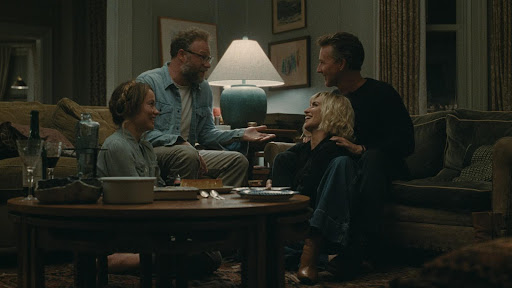
As for Professor Boyer, who mentioned personal favorites like “Drive,” “Butch Cassidy and the Sundance Kid” and “Schindler’s List,” his pick for a movie worth checking out was “Twinless,” a 2025 Sundance premiere. “This movie does fun and inventive things with the way it tells you a story, but is also a really compelling and nuanced film about brotherhood, love [and] loss,” he said. “It’s also funny as hell!”
As genuine artistic expression is increasingly supplanted by algorithmically-generated content, having a healthy appreciation for classics, both old and contemporary, will be harder to come by and even more essential. Do yourself a favor and dive in!