Recently, I saw a trailer for Christopher Nolan’s “The Odyssey.” I was inspired by that trailer to delve into something I previously had not given much thought to. I decided to start reading the classics. You should too.
America today struggles with literacy, particularly our students. 130 million Americans read below a sixth-grade level. For over a decade, Americans have been reading fewer books, novels, short stories or other works in their free time. A majority of American adults report not having read a book in the past year.
All of this indicates that Americans today are uninterested in engaging with the rich fabric of culture that the written word has built over 4000 years. Of course, we should not expect the average American to read the “Epic of Gilgamesh,” the world’s oldest literary work. But Americans should recognize that we have been gifted with a powerful tool in literature.
Why classics
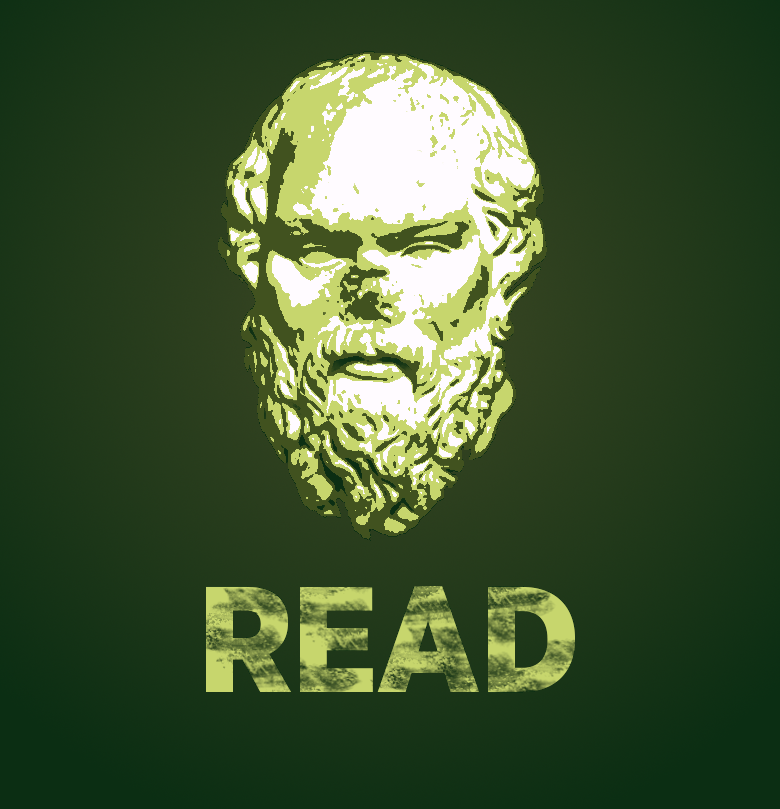
When I say classics, I mean works going all the way back to the ancient world. These works are important not just as literature but also as part of our shared cultural heritage as Americans. For those who are politically and philosophically inclined, such as myself, Plato is a prime example of this, even if you do not agree with the content.
I have read Plato’s “The Republic” and it has some problematic claims and solutions to someone of my political persuasion. For one, its discussion of strictly regimenting and controlling who can marry and have children with whom, as well as recommending that the state raise these children, is particularly disturbing.
However, even criticisms of Plato, Aristotle, Adam Smith, John Locke and other philosophers in the Western tradition require an understanding of these authors. These texts build upon one another. I had a decent grasp of the Enlightenment ideas within the Declaration of Independence before. What truly became fascinating the more I read in Plato and later philosophers, was how I was able to see a thread connecting all of these authors together. I saw how ideas built upon one another. Ultimately, it helped me to appreciate more what I already appreciated and pointed out in starker contrast the flaws I had already seen.
We need to read the fiction of the classical world. In the same way that reading fiction from other countries can help us understand other countries and cultures, we can understand the past through their fiction. Personally, I do not believe in the Greek or Roman gods, but frankly, that doesn’t matter. What matters is that the Greeks and Romans believed in them. Reading stories like the “Iliad,” the “Odyssey,” the “Aeneid” and other works that straddle the line between fiction and myth helps us to see what these cultures valued. The civilizations they built ultimately formed the contours of Europe and, through Europe, the United States. The better we understand these people, the better we can understand ourselves.
I will admit to being ignorant of philosophers from outside the Western tradition but I recognize that they also play an important role. To list every author possible would take far more space and time than this article would allow but philosophers such as Confucius, the Buddha and many others are foundational philosophical texts that we should read and understand.
Personal not educational
While universities have a role to play in educating young adults about these works, the drive to read them should come primarily from the students themselves. The benefits of reading for pleasure are immense.
For one thing, reading for pleasure can reduce stress by 68%, according to a report from the University of Sussex. According to that same study, it is more effective than taking a walk or listening to music. With 87% of students listing school itself as a source of their stress, adding more required reading in a field some students may see as irrelevant would be counterproductive.
Personally, if I were required to read dense mathematical or scientific journals as a history major, I would get stressed. Still, reading works from fields that are not my own would help me to grow as a person. It would help me to recognize my own ignorance.
Reading for pleasure can also improve performance as a student and as a leader. Reading texts critically, trying to understand the meaning and think about the broader context of the work, even if it is fiction, has been shown to increase our ability to think critically.
Increasingly, as AI and social media continue to dominate our lives, the ability to think critically has declined. One report noted that half of the students perform in the lowest two levels of critical thinking and that 45% of students in college do not improve their critical thinking skills. In a world where critical thinking is increasingly important in the workforce, in school life and even to just discern AI images from real images, we risk losing something important.
Students can gain these skills when they read for their school work but as AI has become more powerful, we have seen it used to replace reading. Adding more reading assignments for students when students are already using AI to read for them won’t be enough. Rather, we need to create a culture that values reading as a pastime of its own. I hope that encouraging students to read on their own for their own enjoyment will help them gain the skills they are not gaining in college.
Our Shared History
The written word can share culture and ideas across time. With fewer Americans every year reading books, we are losing out on the transmission of knowledge. Instead, we are replacing that with social media and micro trends. We need to get back to a culture that reads its own works.
I’m still going to watch “The Odyssey” but I hope to have a stronger appreciation of it once I have read it. As human beings, we share in a rich cultural tradition spanning millennia. Once we start to appreciate that and engage with our own histories, we will all be better off for it.