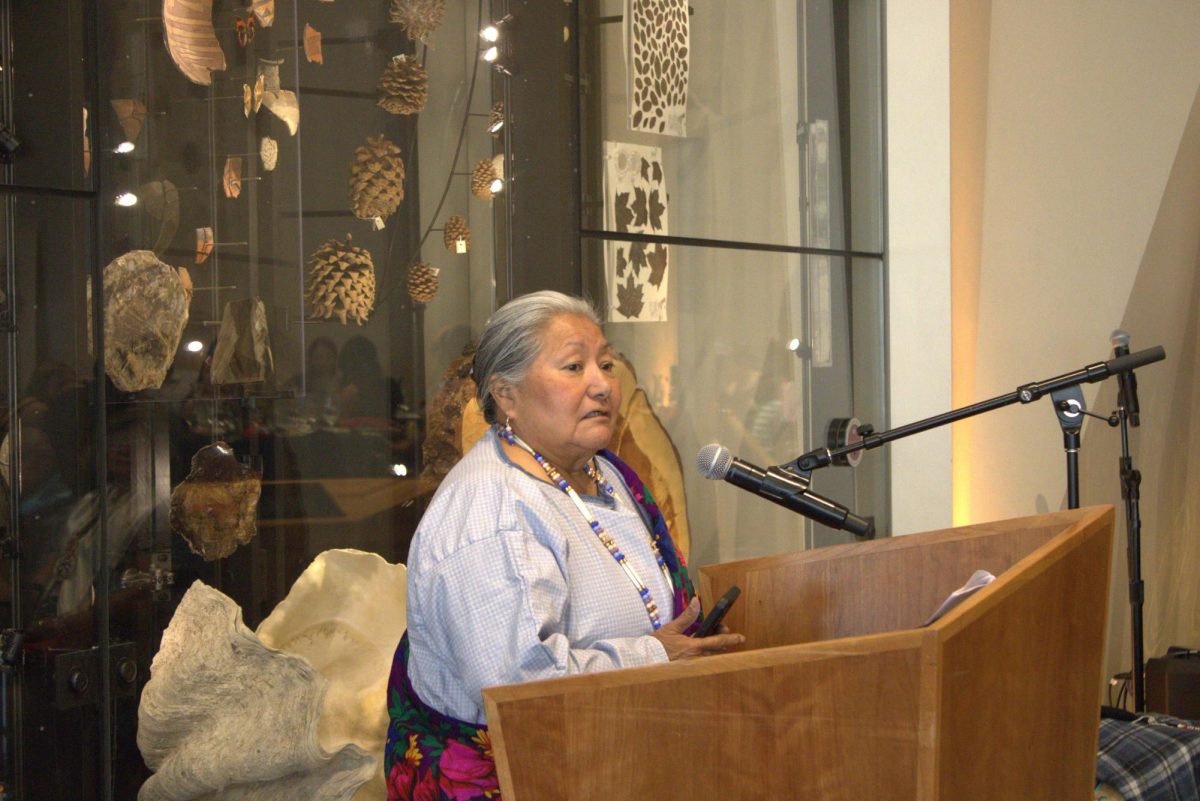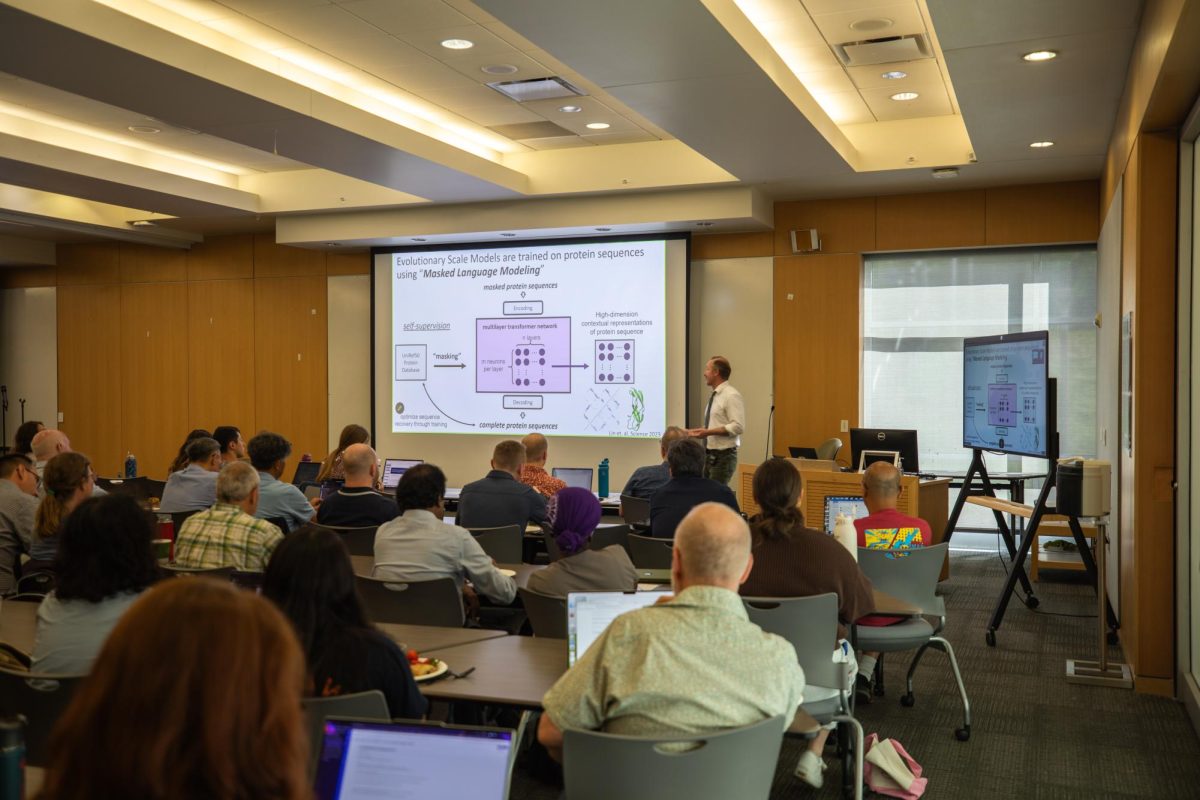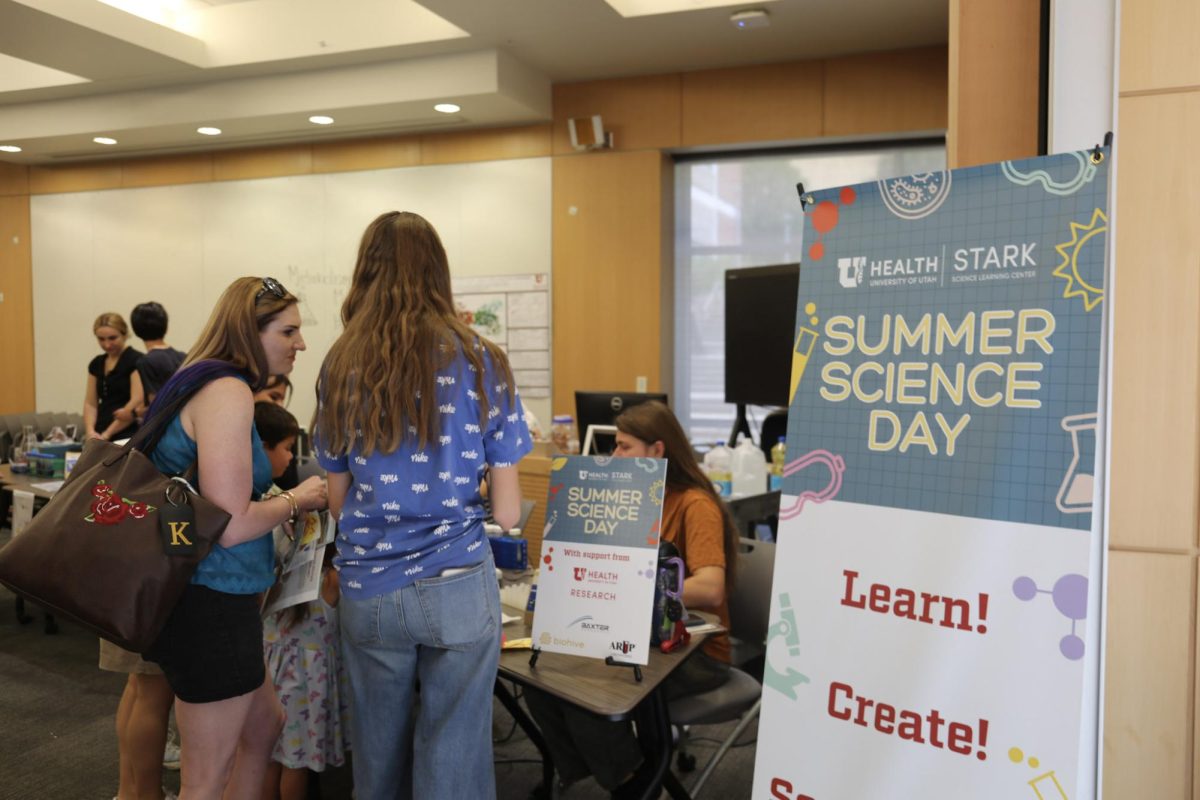
On July 11 at the Eccles Health Sciences Education Building, the Summer Science Day featured multiple science-related presentations, lab tours, story times and tabling opportunities open to all ages. The day-long event was presented by the University of Utah Stark Science Learning Center (SSLC) to explore science and the career opportunities it includes.
Primarily attended by local families, the Summer Science Day included research, presentations and hands-on activities led by university faculty, staff and students.
Presentations
Presentation topics varied from applying to medical school, undergraduate research and cancer.
Bailee Daniels, senior research manager for the Population Sciences and Community Outreach & Engagement at the Huntsman Cancer Institute, presented “Research Without the Lab Coat: How Everyday People Power Better Healthcare.” Daniels said in an interview with The Chronicle that she believes in educating the community about the ongoing presence of research in everyday lives. “Research isn’t this nebulous thing or this covert operation that’s happening necessarily,” Daniels said.
Gillian Stanfield, a U associate professor in the Department of Human Genetics, presented “What to do to Prepare for Medical School.” Stanfield told the Chronicle that public dollars help fund medical schools and grants, so “it’s only appropriate for us to be accountable to everyone.”
Shaza Abdelrasoul is the program coordinator of the PathMaker Scholars Summer Research Program at the Huntsman Cancer Institute. Running the “Wacky Science Wonders: DNA & Gooey Fun!” activity where she extracted DNA from split peas, Abdelrasoul said that she appreciates the event’s appeal to all ages.
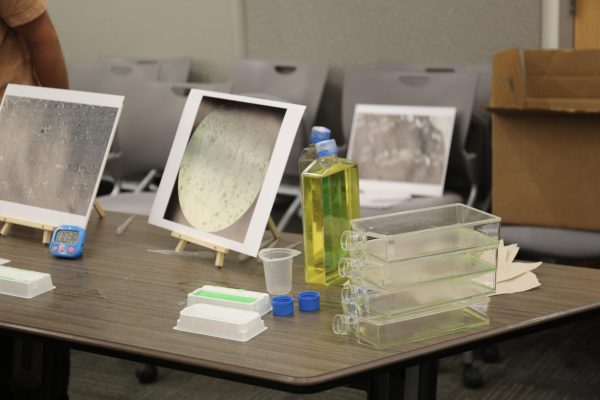
“I’m really happy that the university and Stark Science Learning Center were able to put on this event and really welcome all ages and get them into the habit of being curious about the world around them through science,” Abdelrasoul said in an interview with the Chronicle.
Beyond the event
Paul Gabrielsen is a writer with SSLC who assisted with Summer Science Day marketing materials. “We found from doing these that people really want to learn and scientists really want to teach,” Gabrielsen said. “This is a way to bring those two groups together.”
The SSLC offers services in video and multimedia production and evaluation of program impact and research quality. “We’re here to help professors, researchers, who are looking for ways to communicate their science better to the public,” Gabrielsen said. “We would love to be their partner in doing that.”
The first Summer Science Day event at the U took place in 2025. Gabrielsen said that this year’s Summer Science Day event has grown with more tables and presentations. “Every time we do these, we learn more about how to make these events easier to navigate for everybody and to make it so that everybody can find what they want quickly and easily,” Gabrielsen said.
Gabrielsen said the Center’s mission is to make science engaging and accessible for everyone. “We make science and health easy for everyone to understand,” he said.