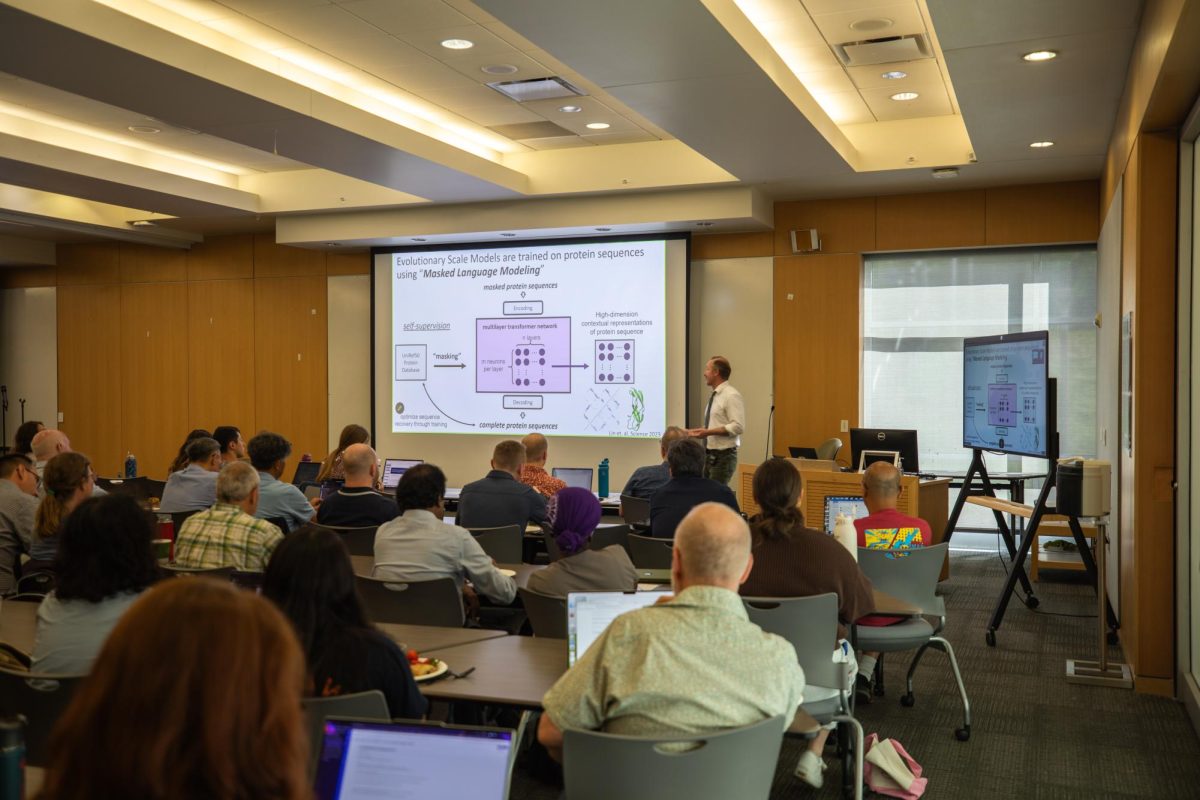
The University of Utah Board of Trustees has approved a $50 million investment from public and philanthropic sources to expand artificial intelligence infrastructure for medical research.
The initiative — designed to accelerate studies on cancer, Alzheimer’s disease, mental health and genetics — will increase the U’s computing capacity by three and a half times and open new opportunities for students across disciplines.
AI as a resource
Dr. Manish Parashar, the university’s Chief Artificial Intelligence Officer, described the initiative as transformative for students preparing to enter a rapidly changing workforce. “AI is becoming one of the most impactful technologies,” Parashar said. “No matter what you’re studying, you will leverage AI, advance AI, use AI in your job, in your education.”
The investment will support new computing systems, foster research collaborations, and provide training programs that reach students in fields ranging from engineering and medicine to the humanities and social sciences.
Parashar emphasized that the university views AI as a tool for all students, not just those specializing in computer science. “Students across campus will engage with these resources,” Parashar said. “We’re building a foundation that prepares them to succeed in whatever career path they pursue.”
Medicine and research
Part of the funding will support the Huntsman Cancer Institute, where AI will play a central role in research on prevention, treatment and precision medicine. Dr. Bradley Cairns, CEO of the Huntsman Cancer Institute, said the new resources will provide direct benefits for students while expanding the institute’s ability to conduct cutting-edge research.
“Students will have many opportunities to benefit from the infrastructure and connected research opportunities,” Cairns said. “We can replicate, and in fact amplify and extend, that story here, because of the way we collaborate with other Utah schools.”
The university plans to model some aspects of its program after initiatives at other research institutions, including the University of Florida’s HiPerGator supercomputer, which has been used to advance both education and scientific discovery. Cairns said Utah’s program is designed to be even broader, especially in how it connects cancer research with other disciplines.
“This investment will ensure students are not only participating in world-class research, but are also gaining the skills that employers are increasingly demanding,” Cairns said.
Training and expertise
University leaders also noted that partnerships with companies like NVIDIA and Hewlett-Packard Enterprise will be important to building and keeping up the new AI infrastructure. Project participants expect collaborations to bring both technical expertise and training opportunities for students.
Parashar said preparing students for the workforce is one of the driving motivations behind the initiative. “This is about building capacity for Utah,” Parashar said. “Our students will graduate ready to lead in AI-enabled industries and communities.”
Cairns echoed that message, saying that the Huntsman Cancer Institute’s work is both globally relevant and locally important. “By training students here in Utah, we’re also preparing them to contribute to discoveries that directly impact patients and families in our state,” Cairns said.
The $50 million investment will be rolled out over several years, with funding dedicated to computing resources, faculty support and student programs. The university expects to begin offering new training opportunities and research placements as the infrastructure comes online.
University visions
Parashar said the initiative aligns with a broader vision of ensuring every student at the university has access to AI resources. “We want to democratize AI,” Parashar said. “That means creating opportunities for students whether they’re in computer science, biology, health or the arts.”
For Cairns, the ultimate goal is to strengthen connections between research and education while tackling some of the most urgent challenges in medicine. “AI is changing the way we understand cancer,” Cairns said. “With this investment, students will be part of that change.”
As the university begins implementing its AI expansion, both leaders emphasized that the benefits will extend beyond faculty and labs. For undergraduates and graduate students alike, the initiative represents an opportunity to gain hands-on experience with advanced technology while contributing to research that could improve lives.
“This is about preparing our students for the future,” Parashar said. “And it’s about giving them the tools to shape that future.”