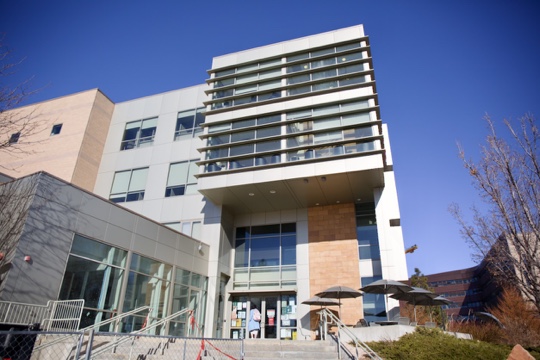
Faculty in the College of Humanities pressed administrators for clarity on budget cuts, communication breakdowns and advising changes during a Feb. 10 college-wide meeting in the Sorensen Arts Education Building.
Dean of Humanities Wanda Pillow and Vice Provost Peter Trapa outlined financial pressures driving recent decisions. These included state‑mandated reallocations, a multimillion‑dollar deficit model and reductions to advising and student success coaching. They also addressed frustration among faculty.
Budget
Many concerns from faculty were fueled by questions over the university budget. The Utah State Legislature reallocated funds given to the University of Utah last year, forcing the U to “reinvest” in “high-impact and workforce-aligned degree programs.” The funds are now allocated as follows:
- $2.7 million for engineering robotics, cybersecurity, biomedical, data science and clean energy programs.
- $2 million to expand the Responsible AI Initiative across campus.
- $1.3 million to expand academic and clinical training programs for behavioral healthcare.
The U has also released that academic affairs and university staff will bear the brunt of many of these cuts, amounting to roughly $4.1 million. This is one of the factors that lead to the academic advisor and student success coaching downsizes, a decision that during the meeting, Pillow said “that none of us [deans] knew about the changes in the Student Success Coaches.”
Pillow described the current position as running on a “deficit budget model.” “A deficit budget model means we are spending more each academic year than we’re bringing in,” Pillow said. “Maybe a college could run like that for a bit. But you can’t do that every single year, year after year, right?”
Pillow added that pay inequity is another problem facing the college right now. “At issue is pay equity,” she said. “When we have an encumbered and deficit model, it means we can’t have funds to invest in things we want to invest in.”
Many faculty at the meeting raised this issue, especially after recent changes to the USHE workload policy. At the U, those changes have affected career‑line faculty the most. “I just want to be clear that given my assessment of the college budget, and the state and the national climate that we are in, I must act with fiscal responsibility,” Pillow said. “This isn’t only for fiscal accountability, though it’s for the stability and the security of the college.”
Communication
Pillow also said that the college is working to improve communication, after many faculty across the university expressed frustration over perceived opaqueness.
“I understand that we need to continue to improve communications together,” Pillow said. “I’m not always going to get this right. I am communicating about difficult, complex situations or challenges that sometimes we’re going to need to talk through multiple times, right? It helps me to talk with you all, hear the questions, and let me know where I need to improve those communications.”
Pillow also said that sometimes faculty concerns are “outside a dean’s purview to communicate on.”
Pillow emphasized that she is hearing questions and concerns. She cited a recent survey sent to faculty, calling it “a place you can drop in any question, any advice, any comment, any concern.” Pillow said she will review submissions every Friday and keep them fully confidential.
Rachel Griffen, an associate professor in the Department of Communications, asked Trapa to “bear witness” to the impacts of many of the changes that are affecting faculty within the College of Humanities.
“I’m just speaking only for myself. I hear you are here advocating for us to increase our understanding of the academic enterprise model. Trying to build trust with us and inviting us to give you feedback. You’re trying to open up more lines of communication between us as faculty and staff,” she said. “And to give you time and room to do that as you go and figure out the position. I just also want to encourage you in a very compassionate way to bear witness to what exists alongside what you’re asking us to do. Many of us in this room feel precarious in ways that are far beyond anyone in this room’s control.”
Policy updates
“They are going to extend the contracts through June 30, if people are interested in extending their contracts,” Pillow said. “We expect a good number of them will return, and they’ve also been told that they could apply for other positions.”
The changes to the academic advisors still did not satisfy some amongst the faculty. “We had great advising before,” Katharine Coles, distinguished professor in the Department of English, said. “And now our students are in despair. I’m getting calls from advising … who are saying ‘well, for the purposes of a creative writing minor, we didn’t advise properly and a student missed the chance to take a poetry class for their capstone. Do you think a class in film would be a good substitute?’ So, I asked my poetry students, is this happening to you guys? And they said we won’t go to the advisors.”
Trapa said that for a “disastrous” situation like the one Coles described, to directly send him an email. “What you just described is, as you said, disastrous and something that I would want to be aware of,” Trapa said.