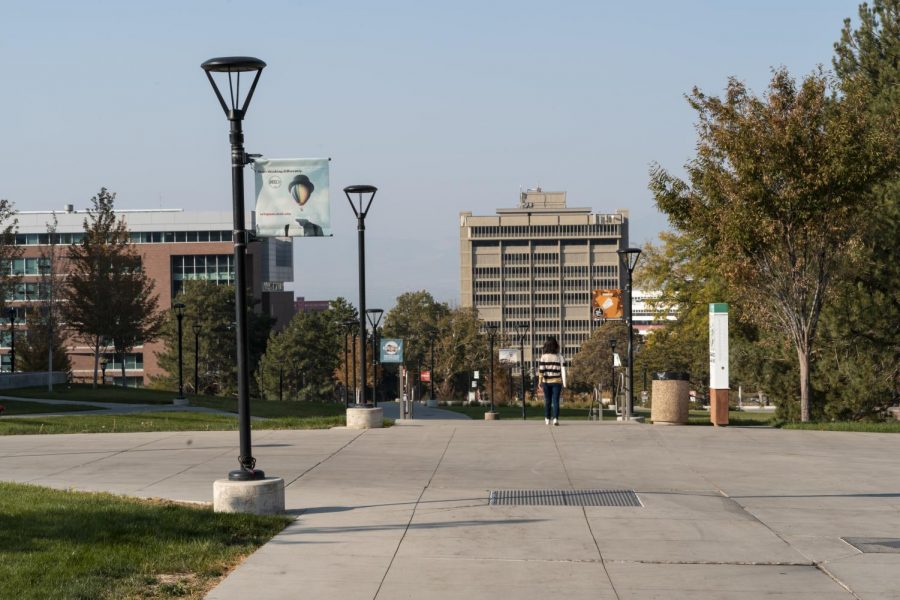
The Department of Public Safety at the University of Utah is showing a troubling trend on the U’s health campus, with new data indicating that nearly three-quarters of campus crime occurs in the area that houses University Hospital, Primary Children’s Hospital and the Huntsman Cancer Institute. Some healthcare workers say they’re bearing the brunt, and some are getting hurt.
According to the Daily Utah Chronicle’s ongoing Crime Reports series, the health campus has consistently accounted for the majority of reported campus crimes. In just January and February 2025 alone, 42% of all reported campus crimes occurred on the health campus.
Current Data
Crime data from May and June 2025 show that 392 of the 540 reported incidents on campus occurred on the U’s Health Campus. Among these, 68 were classified as assaults on healthcare workers, ranging from simple to aggravated assault.
Additional reported crimes in the area included drug possession, theft, harassment, rape, stalking and sexual battery. These figures reflect a concentration of reported criminal activity on the Health Campus, though they do not represent the full range of offenses documented during this period.
The Daily Utah Chronicle reached out to the U’s Department of Public Safety — Health Security Division for comment but did not receive a response.
National data aligns with trends observed on the U’s Health Campus. According to the American College of Surgeons (ACS), healthcare workers are five times more likely to experience workplace violence than workers in other industries, and account for 73% of all nonfatal workplace injuries and illnesses caused by violence.
The ACS attributes many of these incidents to “angry patients coming into the hospital with violent intent,” particularly in high-stress environments such as emergency rooms and trauma bays.
Healthcare Workers’ Perspective: Garland Hummel
Garland Hummel has worked at the University of Utah Hospital since 2011 and recently earned his Doctor of Nursing Practice (DNP). He began his career as a psychiatric technician in the Acute Inpatient Medical Psych unit. After completing nursing school, he transitioned to the Neuro Intensive Care Unit (ICU), where he has served as a psychiatric mental health nurse practitioner since 2016.
Over his 14 years at the hospital, Hummel says he has lost count of how many times he has been assaulted on the job.
“When I was working as a psychiatric technician, we experienced fairly frequent assaults, just based on the patient population we served,” Hummel said. “These were individuals who weren’t always competent or fully aware of what they were doing. So being punched or kicked wasn’t exactly normal, but it also wasn’t uncommon. It would happen, honestly, almost weekly.”
One of the most serious incidents occurred when a patient bit him during an evening shift.
“The patient was already agitated and demanding drugs, saying things like, ‘I want some f—king Ativan. If I don’t talk to the provider, I’m going to beat your asses.’”
As the patient grew more aggressive, they threatened to “knock down” a staff member if they didn’t see a provider. Despite efforts to de-escalate the situation, Hummel’s colleague was punched in the chin and collapsed.
“I scrambled to get between them and took the patient to the ground gently,” he said.
While waiting for security to arrive, the patient claimed they couldn’t breathe. Hummel loosened his hold in response, at which point the patient bit him.
“I posted up and gave her just enough space between my arm and her face for her to turn and sink her teeth into me,” he said. “She had a good grip on me and started shaking.”
The bite tore through both layers of his clothing and broke the skin. Hummel was bleeding and later had to undergo post-exposure prophylaxis (PEP) to prevent possible HIV infection.
In another incident he witnessed, a colleague was attacked so severely that part of their finger got caught in a door, resulting in their finger getting cut off.
In the case where Hummel was bitten, he said that the patient was not in the right state of mind. “This is like somebody with poor dentition, very clearly a methamphetamine aficionado”.
However, in the other case where Hummel’s co-worker lost a part of their finger, the patient was said to have malicious intent. The patient, who was a “repeat customer” to the hospital, was diagnosed with Bipolar Disorder (BPD) on one of their earlier visits.
“I was familiar with him because my partner was working on another unit at the time, and the patient had previously sexually assaulted a healthcare assistant at St. Mark’s Hospital,” Hummel said. “They had cornered her in a blind hallway near a linen room, an area where no one could see what was happening. This wasn’t someone in a psychotic state; this was someone acting with clear intent — malicious and calculating.”
Health Care Workers’ Perspective: Jordon Leamaster
Hummel’s experience reflects a broader issue affecting healthcare workers across the University of Utah system. Jordon, a psychiatric technician at the Huntsman Mental Health Institute since 2018, has also faced similar challenges. He described patient aggression as a frequent part of the job, reinforcing the concerns raised by many in the field.
“At one point, a patient put me in a bear hug and bit down on the top of my head so hard I lost a significant amount of skin. It’s probably the worst incident I’ve experienced.”
In addition to physical tolls, Leamaster spoke to the emotional toll these attacks have taken on his mental health.
“I’ve been in therapy through the university’s employee assistance program because of that incident, and it still affects my job performance at times,” Leamaster said. “If I’m constantly worried about whether someone might hit me, it can change how I communicate and respond in the moment.”
Leamaster’s duties as a psychiatric tech require a strong amount of patient interaction. He works the day shift, starting at 7 a.m. with a handoff report outlining each patient’s status from the previous day. On his unit, he may be responsible for monitoring up to 19 patients at a time. His core duties include conducting safety checks every 15 minutes, documenting patient behavior, assisting with meals, taking vital signs and leading therapeutic activities such as music sessions or Dialectical Behavior Therapy (DBT) skill-building groups. He also charts individual patient progress and supports the overall care team in managing the unit’s needs.
“No one wants to be in the hospital, but as a psych tech, one of the most important parts of the job is making sure patients feel cared for,” Leamaster said. “When you’re worried about getting hurt or being attacked, it adds a barrier to that connection.”
University of Utah Hospital Guidelines
According to the University of Utah’s Emergency Response Guide, any medical injury involving faculty or staff must first be reported to a supervisor. Following this, employees are required to complete Form E-1: First Report of Injury, which documents the incident in detail.
Per Utah’s workers’ compensation guidelines, employees are entitled to receive 66 2/3% of their wages, up to 100% of the state average weekly wage, beginning three days after the injury, provided a physician determines they are completely unable to work.
However, in cases like those of Leamaster and Hummel, healthcare workers often rely on their own paid time off before those benefits apply, or if the injury doesn’t meet the threshold for lost-time compensation.
In addition, Hummel said there’s a common belief among healthcare workers that pressing charges against mentally altered patients is pointless and unlikely to lead anywhere. However, he strongly disagrees with that mindset, saying that creating a paper trail and documenting repeated incidents is essential.
“Establishing a clear pattern of behavior,” Hummel said, “can put pressure on the university and other healthcare systems to take more meaningful action to protect their staff.”
Union Impact
Both Hummel and Leamaster are members of the Communication Workers of America Local 7765 (CWA 7765) union. Utah Health Workers United (UHWU) serves as a unit of the union representing employees across the U of U Health. The group is focused on organizing around shared priorities such as fair compensation, safer working conditions and stronger workplace protections.
Hummel said that while hospital administration may view nurses as interchangeable, the reality is that most staff are highly specialized and operate within distinct units.
“If a significant number of employees from a specific area, like ICU nurses, circulating nurses, or scrub techs, were to call out, it could effectively shut down the hospital,” he said. “Elective surgeries would be delayed, operating rooms would close and the financial impact would be immediate, potentially costing millions in lost revenue within a day.”
He pointed to similar disruptions during the COVID-19 pandemic, when hospitals lost money due to the suspension of elective procedures. “We’ve seen the impact before, and it’s clear the workforce holds significant power,” Hummel added.
Leamaster said that since organizing, union members have pushed for improvements in staffing and working conditions.
“We’ve submitted petitions to the administration calling for better staffing ratios,” he said. “There have already been some wins — like improvements to the parking situation at the main hospital, where staff previously had to pay just to show up for work.”
Although the union is not formally recognized by the university, Leamaster noted that their presence is starting to make an impact.
“Since we formed the union, the number of callouts has increased from five to eight in a calendar year,” he said. “And I’ve heard staffing ratios at Huntsman Mental Health Institute are set to improve too, which could enhance patient care.”
Next Steps
In September 2024, more than 2,000 University of Utah Health employees signed a petition addressed to the CEO of U of U Health Hospitals and Clinics, Dan Lundergan, outlining three core demands:
-
Address income disparities by aligning wages with those at comparable institutions and implementing transparent pay structures.
-
Expand benefits, including increased parental leave, paid time off, and sick days.
-
Improve access and affordability of employee parking and commuter transportation
According to KSL News, CEO Dan Lundergan’s response to this petition was a survey and a proposal to meet with employees one-on-one. Additionally, U of U Health released a statement, including:
“While U of U Health cannot formally recognize organizations for collective bargaining purposes, we remain committed to transparency, active listening, and collaboration. We encourage ongoing communication with our teams to enhance working conditions and address any issues.”
While broader systemic changes remain underway, Hummel and Leamaster offer practical advice for healthcare workers navigating the current conditions.
“Though these attacks have taken place over many years, people have become more distrustful of healthcare workers,” Hummel said. Be cognizant that this is what you are getting yourself into”.
Leamaster echoed these statements.
“Know your patients and their histories. In many cases, incidents like these aren’t the first time the person has acted that way,” he said. “If you’re aware of that history, you can approach certain situations with more caution.”